30 May 2026

Vaclavs Kozlovskis in Pyramid Hill, August 1948, translated by Monika Kozlovskis

PYRAMID HILL, 1.8.48, Sun

I prayed for rain, but as usual when it’s needed it doesn’t arrive, and at ten minutes to two we left home, with me wondering how things will turn out. First of all we met Jan and Barreli going in the opposite direction. They told me to come to the tennis court straight away, and we kept walking. Velma and the other girls had already gathered and so we started playing basketball. Who knows, maybe everything will be all right, I told myself, because the first tennis court was taken and the other didn’t have a net. But unfortunately it wasn’t all right- after some ten minutes Jan and the other girl showed up and, looking in our direction, started putting the net up. I definitely had to go over there, but couldn’t think up a reason to leave. This reason came of its own accord, quite unexpectedly.

Apparently with my nervousness and poor playing I annoyed Velma a little - she went to the other end of the court, and sent the little lass in her place. If that’s how it is - I put Krysis in my place and walked over to the tennis court. I occupied many hours with the racquet and ball, and I must say that this game is better than any other I’ve played in Australia. In future I’ll have to stick with tennis. It doesn’t matter that Velma and the others are annoyed, sooner or later their anger will burn itself out, especially if it peaks next Sunday, when even Vytas is supposed to come and play tennis.

PYRAMID HILL, 8.8.48, Sun

I turned the calendar and judged by the date that the fierce southern wind, which rattles the Australian dentures every morning, is still supposed to be blowing. But not always does what’s written on paper coincide with the truth - an ever-clearer smile is beginning to appear on the sun’s face. Less and less she seeks cover behind the clouds, and more and more surely her warriors engage in combat, hurling brilliant boomerangs and incandescent spears to stab the quickly fleeing strength of winter.

We have sung many songs of praise of winter, and cursed summer too often, therefore these spears attack us too. It seems the time is near when the last of winter’s strength will be beaten, then the brilliant boomerangs and whitehot spears will turn their full force against us, leaving little white water blisters on our skin once more. The sun will smile widely as she tyrannises, while our sweat pours down and we search for relief in the waterhole’s brown water, waiting patiently until the next winter monarch invents an atom bomb and comes to deliver us again. My body weapons factory, with increasing tempo, is desperately attempting to convert my thick northern blood to thin southern blood, but this job, despite the urgency, is occurring damned slowly.

Today I rose at eight. Yesterday I had a drop too much, and as a result of the gin and beer I became completely stupid, but today like a miracle my head is quite clear. At ten thirty I said a few quiet prayers in the church, after that I had lunch with the local schoolmaster, who kindly invited me. He is a very nice person, which perhaps is the reason I feel so comfortable in his company. This afternoon I played tennis again, this time it turned out quite well. I was so carried away by the game that I returned home completely exhausted, but better acquainted with several pleasant people.

The longer I live here, the clearer it is to me that Australia really is becoming my home. Whether I want to or not, now and again I compare both countries, and each time I conclude that it’s better in Australia. What is waiting for me in my distant northern land if I return? Even in peace time it was difficult to find work, the wages were low and the living conditions weren’t much good. Could I earn a bicycle or a wireless there, in one month? And what’s wrong with living here? I don’t have to worry about finding a job, everything is cheap and abundant. Would it really be worthwhile to return now, or even later, to the wreckage, and begin my life all over again? I’m too old for that, and too tired of this constant starting up of new lives.

But despite everything, home is home; it will always pull me, and precious memories will always remain. After all, I spent my happiest childhood days there, and all my family is there. Will Destiny lead me back one day?

It seems as if the wheel of time is somehow turning awry, and all is not right with the change in weather, for on work days the sky is clear and the weather itself is fine without wind, but as soon as Saturday is here, then it’s usually raining. Today instead of rain, a fierce wind blew, considerably testing the strength of the papering inside my cabin. Although it’s difficult riding against the wind on bicycles, the three of us struggled to the tennis court, for after all, we’d promised to play. We had little hope of anyone else turning up, but miraculously a car soon drove up and out of it climbed four girls with their tennis racquets. Might as well: we started playing, but it was too difficult to control the ball in the strong wind, so after an hour we stopped our fruitless running after the balls that we hit over the fence.

On our way home we turned into the local pub for a few beers, but these “few beers” turned into a party, which continued on even after the pub’s formal closing time. By the time the pub’s doors were behind us, a huge swarm of bees had begun humming in my head. At the crossroads we met Jim’s wife, who said that next Saturday it’s her birthday, but she can’t have a party at her house, therefore she’d like to have it in our kitchen, and invited us as well.

PYRAMID HILL, 15.8.48, Sun

A huge wind is blowing again today, it’s a wonder as to when it will stop. I stayed home all day and pottered around. It’s cold and my head aches a little…

PYRAMID HILL, 21.8.48, Sat

From everything only sadness remains And pale dust and ashes, cover it all My hands are tired - I cannot light the fire My eyes are blinded - they are sore and cannot see. From everything only emptiness remains, And the ash from dying embers drifts onto the ground. What I longed for yesterday - today I don’t desire, The lips I pined for, the kiss will never come. From everything only disappointment remains. You ask yourself and wonder: was that reality? With a dim mirror you exchange glances Like Judas, hating yourself, as you tie a noose around your neck. Only emptiness, disappointment and sadness remain.

One after the other the days rush by, the weeks pass and the months are overlaid with the quilt of the past, and the powerful river of time is unstoppable. Her waters wash away all pain, joy and sorrow; all that remains is an empty person, who walks along the bank against the current, without peace. Another week has flowed past, and so I have also come closer to my own inevitable peace. The remaining months will also pass like this, and then from the Pyramid days as well, only memories, several photos in my album and words in my journal will remain….

After the usual tennis game and short rest at home, Vik and I half-emptied a liqueur bottle and went dancing in a light mood. I happened to dance with the dark-haired lass, and often my eyes met her dark twinkling ones, and her face screwed up in smiles. Can it really be that Fate plans to send her to Melbourne at the start of next month! That’s no good, then there will no longer be any girl left here who I really like. But nothing can be changed - the flow of Time’s river is unstoppable, and it never stops echoing : “From everything only emptiness, disappointment and sorrow remains…”

At tonight’s dance lottery tickets were being sold, this time for the Red Cross. I bought two; who knows, perhaps I’ll win a house, and settle into my life in earnest? The receipt I’ve taped into this book is testimony that I’ve posted two pounds as a payment on a dancing course. Although I now know almost all the local dances, it would still be worthwhile to learn them perfectly. It will be very interesting to see how I can learn by mail, without music or a partner?

PYRAMID HILL, 22.8.48, Sun

Oh, quiet church, your sombre, holy walls let me forget worldly things for a while; they enclose me in peace, why search anywhere else… and Mary, clothed in such a beautiful, holy dress! This afternoon I smiled back at the black-haired lass again as we played tennis. In the late afternoon an enormous wind blew up, driving before it a large pile of sand. The wind came from behind us, so we hastily began our ride home.

PYRAMID HILL, 24.8.48, Tues

Work is work, and play is play - tonight Vytas and I emptied the remaining liqueur and went dancing again. Of course, the liqueur wasn’t enough, and some beer and nice wine joined it from our friends’ direction, and with each glass my mood improved. As usual at a large dance, all the women were wearing long dresses, so it paid to be careful. The schoolmistress’s dress was so long that whether I wanted to or not, I couldn’t dance with her without treading on it, but should I worry about that? If she can’t wear a shorter dress, let her go home!

PYRAMID HILL, 31.8.48, Tues

It’s no good drinking on workdays like that - today I’m sleepy and my head aches. No work has been done in the quarry since the middle of last week because all the vehicles have broken down, so this morning I occupied myself with the old task of restacking the iron. This afternoon I finally returned to the peace of the quarry. The crusher isn’t working and the trucks don’t come, so we crawled into a corner while one of us went up to look out for the boss.

But the rogue obviously wasn’t being careful, for the boss swanned up completely unnoticed and immediately his “blessing” followed. Thus it turned out that we had to practically warn our sentry of the boss’s arrival.

While the boss was in the quarry we applied ourselves industriously, and continued production for an hour or so after he left, until it started raining, and we once more crawled under the shelter until work finished. Around five Father O’Connor came to visit us. He is a likeable man and knows the communists well; on Sunday he will hold a service for our loved ones and families.

This Australian wind is terrible - it comes from I know not where, blows, almost tips us off our feet and tries to wrench my cabin roof into the air. The buffeted cabin walls make the table shake so it’s difficult to write anything, the roof paper flaps, and all the cabin joints rattle.

From this page of Vaclavs' diary but from an unknown newspaper
(Click once if you want to read a larger copy in a new browser page)

26 May 2026

Helmut Nurmsalu (1927-2014): Assimilated Australian, Father of Star Designer, by Ann Tündern-Smith

Helmut is the fourth First Transport arrival recorded in the Thornton photograph turned into a postcard which Juozas Nakas sent to his brother, Osvaldas, still in Germany, in mid-1948. Helmut is the one sitting on the truck's step.

Helmut sitting on the truck's step with (left to right)
Edvardas Lapinskas, Bernardas Matkevičius and Juozas Nakas
Source:  Private collection

When I started to look for public evidence to add to that part of Helmut Nurmsalu’s life recorded in the files of the National Archives of Australia, I thought that it was scant. I thought his life story would be a brief one.

That was because I started by looking through the digitised Estonian-language newspapers which that country’s national library has made available on line through its Digar Website. While this produced 14 Results which included the Helmut Nurmsalu name, 13 of them were recent mentions of a person living or recently deceased in Estonia.

Our Helmut was included only in a 1948 list of Estonians refugees who had resettled already in Australia, published at the end of the year in a Swedish newspaper, Stockholms-Tidningen Eestlastele (a mixture of Swedish and Estonian which translates as Stockholm Newspaper for Estonians).

Then I discovered how much of his life was recorded in Australian publications digitised by Australia’s National Library in its Trove collection. I realised that the picture was very different.

How Helmut Assimilated

When the Federal Government took the lead in immigration matters after World War II, the official settlement policy was assimilation. Immigrants were expected to “forget the past, look forward to the future”.* Fortunately, the Government forgot to tell the immigrants much about this, as they set about starting new community groups or building on existing ones, publishing newspapers in their own languages and so on.

Some individuals – or were they individualists? – went their own way. We probably can describe Helmut as one of them, someone who assimilated although he possibly did not know that this was what he was doing. It must have started before July 1950. That’s when his engagement to marry a young Australian woman was announced by an advertisement in Melbourne’s Argus newspaper.

His intended was Elizabeth (Betty) Robinson, third daughter of Mr and Mrs RV Robinson of Sunbury. It was then a rural town, with a population of around one thousand, 38 kilometres northeast of Melbourne’s central business district. (Today it is more like an outer suburb of Melbourne, with many residents commuting by rail into the city for their work.)

His Marriage

The marriage took place on 5 February 1951 in Melbourne’s leading Catholic church, St Patrick’s Cathedral. Helmut had stated that he was a Protestant, most likely a Lutheran, before migration to Australia. In contrast, he is listed as a Roman Catholic on the passenger list (“nominal roll”) for the voyage of the Heintzelman. He may or may not have been required to convert to Catholicism before the marriage.

Having the marriage ceremony reported by newspapers probably required relatives to contact the social pages editor. That looks like what Betty’s family did, as reports subsequently appeared in two Melbourne newspapers, The Age and The Argus, on 7 February 1951.

The focus in the Argus article was on bridal wear, although the groom’s origin in the Estonian town of Türi got a mention. The Age added descriptions of the clothes worn by 2 bridesmaids and a flower girl, it named the best man and a groomsman, and it added a reception which followed Hotel Federal. What a contrast to what Helmut had endured during World War II, which had ended less than 6 years earlier!

Helmut's photograph from his Bonegilla card

Both partners to the marriage were living in Sunbury. Helmut’s occupation was stated to be Process Worker (someone who carries out repetitive operations in a factory) while Betty was Receptionist.

Might the couple have moved then to rural Omeo? The National Archives of Australia’s RecordSearch Web function can find files relating to one Nurmsalu only, our Helmut. In all cases, his first name is spelled with an addition H on the end, the German spelling. The Estonian T has a soft sound anyhow, more like our D, so Estonian orthography sees no need to add an H where German and even English writers often do. For example, the newly independent Estonian Government had to write to the Australian Government to beg it not to spell the English version of its name as ‘Esthonia’. There’s a whole file on that topic in the National Archives.

Helmuth Plays Australian Football

Back to Omeo, in rural Victoria’s far east. Actually, even more rural, to a town called Ensay on the Great Alpine Road, located between Swift’s Creek and Bruthen. If Australia had villages, this would be one, with a population of 109 in 2016. The local Bairnsdale Advertiser and East Gippsland Stock and Station Journal reported on an Australian Rules football player with the family name Nurmsalu during the 1953-54 season.

He was named first as ‘H. Nurmsalu’, one of Ensay’s goalkickers, in the 1 June 1953 issue. He was named as one of Ensay’s 3 best players for the game. In the 15 June issue, he was named again as one of the goalkickers and best players for the team, although without an initial this time. His team reached the semi-finals played on 15 August 1953, losing to their Swift’s Creek rivals, when he again kicked one goal and was one of the best 6 players for the Ensay team.

For those readers more familiar with the type of football which Nurmsalu may well have played previously, soccer to Australians, jalgpall (literally, football) in Nurmsalu’s mother tongue, there are 18 players on an Aussie Rules team. This means that the top 6 are the best one-third, not more than half.

At the end of the season in August, votes for the Best and Fairest Player in the Omeo District League were tallied. Helmut was not the winner, but he scored a respectable 8 votes, enough to get a mention in the report in the Bairnsdale Advertiser. From this we learn also that his playing position was ruckman, normally the tallest player in the team whose main job is to contest the ball when play is not moving, particularly the centre bounce at the start of the game and boundary throw-ins after the ball leaves the playing oval.

Helmuth’s height according to his Bonegilla card was only 5 feet 6 inches, which is below 1.7 metres. The medical report completed at the Babenhausen camp before Helmut was accepted for migration to Australia says that he was taller, 1.8 metres (5 feet 11 inches, translated to the measurements still used in the USA). That could be tall enough to be a ruckman in a shorter community. (Babenhausen got a mention in our second last entry because Martha Donald, soon to travel to Australia on the same ship as Helmuth, moved to the same camp.)

At the start of the next season, 22 May 1954, Nurmsalu was again one of the goalkickers for Ensay and one of the team’s 4 best players. In the next Saturday’s game, he did not kick a goal but once again was one of the 5 best players. He was the team’s best goalkicker in the 26 June game, with 2 against Swift’s Creek, and of course one of the 3 best players, but his team lost heavily. The final score was Swift’s Creek 17 goals, 7 behinds for 109 points, while Ensay scored only 6 goals, 7 behinds for 43 points.

That’s the last we can read of Nurmsalu playing for the Ensay football team. However, the likelihood that it’s our Helmut is supported by Betty’s presence on the local Commonwealth-State electoral roll for the Division or Province of Gippsland in 1954. Her place of residence was Ensay North (apparently Ensay was much larger back then) and her occupation was Home Duties.

Another 1954 Electoral Roll, dated 25 February 1954 like the Ensay one, has Betty resident at 45 Waverley Street, W5 (Essendon), for the Commonwealth Division of Maribyrnong and the State Assembly District of Moonee Ponds. One of those two rolls was incorrect.

Helmuth Becomes an Australian Officially

The next public record is the grant to him of Australian citizenship in a ceremony on 16 October 1957. His address at the time was on Nepean Highway, Aspendale, now back in greater Melbourne. At nearly 30 kilometres southeast of the edge of Melbourne’s central business district, it was almost as far in the opposite direction as Sunbury was to the north west. A car trip between the two to visit Betty’s family would still take more than 2 hours today.

Helmut officially became Helmuth with his new citizenship. Maybe he just gave up trying to spell it the Estonian way. Maybe putting the H on the end helped other people to pronounce it in a way which sounded more Estonian. Maybe it helped them to stop saying his name as if it was protective headwear.

Helmuth's Residence and Occupations

He first appeared in a 1958 electoral roll, with Elizabeth, for Gisborne, the next town on the railway line beyond Sunbury. He had become a Linesman by occupation. The interesting thing about that is it was the occupation given by his father-in-law on the marriage certificate. Robert (Bob?) Robinson must have introduced Helmut to this work.

His occupation on the Personal Particulars of Person Wishing to Migrate to Australia form completed in Germany was given as Agricultural Work. It records no previous occupation but the AEF DP Registration Record, also completed in Germany, also in September 1947, records his previous occupation as Locksmith.

Maybe Helmut played more Australian Rules football with local teams. We don’t know if he did as not all the small newspapers with local circulations have been digitised for the National Library of Australia’s Trove Web service.

Helmuth and Elizabeth stayed at the same address for the 1963 roll, but moved to another home in Gisborne for 1967 and subsequent rolls, until 1980. The electoral rolls beyond that year have not been digitised yet.

Helmuth's Children

An interesting addition to the 1977 rolls in the appearance of Susan Mary Xavier Nurmsalu, who must have turned 18 on or after 21 March 1973. That’s the date on which Australia’s voting age was lowered from 21. According to Betty’s gravestone (see below) Susan is the middle child of Betty and Helmuth. Her older sister, Helene, does not appear at all on the electoral rolls as Helene Nurmsalu: perhaps she married before she became old enough to vote. Their younger brother, James, must have enrolled after the 1980 rolls closed.

Helmuth Becomes a  Public Servant

During this time, on 17 May 1973, the Commonwealth of Australia Gazette included a notice which said the Helmuth Nurmsalu had been appointed to the Department of Civil Aviation as a Fitter and Turner.  A later Gazette, published on 8 October, said that his appointment had dated from 20 February.

Helmuth was now an Australian Public Servant, at the age of 46. Having previously married an Australia, played Aussie Rules and become an Australian citizen, how much more Australian could Helmuth become?

He also had changed his occupation from Linesman to Fitter and Turner. Presumably he had been upgrading his skills and perhaps practising what he had learned in Estonia 30 or more years previously. Maybe he had the help of his father-in-law again.

Within a few months, Helmuth found out how the Public Service worked. In August he received a provisional promotion to a supervisor position. On 15 November, the Gazette announced that his promotion had been cancelled, with someone else being promoted to the position after going through a formal process of appeal.

He did try again, but it was 9 years later. The Gazette of 29 July 1982 announced that the has been promoted to Senior Fitter and Turner in the Department of Aviation (as it was called now) with effect from 24 June that year.

Public Servants are eligible to retire with superannuation (a pension to which they have contributed part of their salary) from the age of 55. In Helmuth’s case, that would have been on 10 February 1982, so clearly he had stayed on. Not having joined the Public Service until he was in his 40s, he did not have as much superannuation accumulated as someone who had started in their 20s or teens. The compulsory retirement age then was 65, so Helmut may well have stayed in his secure job until February 1992.

There should be a record of his retirement in an issue of the Gazette digitised by the National Library. If there is, it has been missed by the Optical Character Recognition (OCR) process.

Deaths

Betty died on 22 April 1995. She was buried in the Sunbury Cemetery, under a plaque which names Helmuth, the three children and two grandchildren. It is in the shape of an open book, with the right page still blank and waiting for Helmut’s details. 

This should mean that he is with us still but contributor to this blog, Rasa Ščevinskienė, has found a death notice in a rural newspaper using the Ryerson Index.  The Great Lakes Advocate, published in the Gippsland town of Forster, carried the notice for Helmuth, also known as Charlie, on 12 March 2014, so he probably died soon after his 87th birthday.  Either he had moved back to Gippsland, where life certainly would have been more unhurried than in Melbourne, or someone remembered him from the Aussie Rules football days.

The plaque for Betty Nurmsalu in the Sunbury Cemetery

Of the 3 children, Susan achieved national fame as the designer of a self-titled women’s clothing range.

Susan the Star Designer

The September 1993 appearance of the first Aboriginal model on the front cover of the local edition of Vogue magazine is regarded as a turning point. The model was Elaine George; her apparel was a white top by Susan Nurmsalu.

Elaine George with the September 1993 Vogue cover
featuring her in a Susan Nurmsalu top

Susan’s Web presence indicates that she was designing tailored women’s workwear, jackets and coats, and using higher-quality natural fibres. Her output appears to have been aimed at professional women and was sold through boutiques and higher end chain-stores.

Sadly, her individual designing career did not last long. A 1997 issue of the Commonwealth Gazette carried a notice under the Federal Corporations Law, announcing that a receiver and manager had been appointed to Susan Nurmsalu Pty Limited. This meant that the company had been unable to pay a loan on time.

Susan moved on to design for Trent Nathan. This company, founded by a designer of the same name in 1980, had evolved into one where the brand was more important than the designer. It kept its new designer away from publicity.

The deregistration of Susan Nurmsalu Pty Ltd was announced in an ASIC Gazette (published by the Australian Securities & Investments Commission) on 18 October 2005. That was around the time that Susan left Trent Nathan. I’m guessing that she then was aged around 50, with decades of creativity left in her.

There has not been publicity about her since. Susan's skills as a designer remain on display, though, with clothing bearing her name still available on auction Websites.

Her siblings do not have a Web presence, either, unless under changed names. We can but wish all of them the best.

FOOTNOTE

* This quotation comes from a headlines after the arrival of the Heintzelman passengers in Victoria via the Australian military ship, the Kanimbla.  See, for example, the Courier-Mail of 15 December 1947.

SOURCES

‘AEF DP Registration Record, Nurmsalu, Helmuth’ Reference Code 03010101 17 193, Folder DP2908, names from NUN, Leiger to NUSBARD, Don (2), 3.1.1.1 Postwar Card File / Postwar Card File (A-Z) / Names in "phonetical" order from N, ITS/Arolsen Archives https://collections.arolsen-archives.org/en/document/68445396, accessed 25 May 2026.

Age (1951) ‘Bride in Pink’, Melbourne, Vic, 7 February, p.7 http://nla.gov.au/nla.news-article204966878, accessed 24 May 2026.

Ancestry ‘All Census & Voter Lists results for Nurmsalu’ https://www.ancestry.com/search/categories/35/?name=_Nurmsalu&birth=_Australia&residence=_australia_5027, accessed 24 May 2026.

Argus (1950) ‘Engagements’, Melbourne, Vic, 4 July, p 9 http://nla.gov.au/nla.news-article22913198, accessed 24 May 2026.

Argus (1951) ‘… And the Bride Wore’, Melbourne, Vic, 7 February, p.7 , http://nla.gov.au/nla.news-article23042111, accessed 24 May 2026.

ASIC Gazette (2005) ‘Company/Scheme deregistrations’ Sydney, 18 October, p 69 https://download.asic.gov.au/media/1314613/ASIC41A_05.pdf, accessed 25 May 2026.

Bairnsdale Advertiser and East Gippsland Stock and Station Journal (1953) 'Omeo District League: Swift’s Creek win First Game of Season: Omeo Defeated by Benambra', Bairnsdale, Vic, 1 June, p 8 http://nla.gov.au/nla.news-article269553315, accessed 24 May 2026.

Bairnsdale Advertiser and East Gippsland Stock and Station Journal (1953) ‘Ensay Inaccurate Down to Omeo: Benambra Win Again' Bairnsdale, Vic, 15 June, p 8 https://trove.nla.gov.au/newspaper/article/269552237, accessed 24 May 2026.

Bairnsdale Advertiser and East Gippsland Stock and Station Journal (1953) 'Omeo District League, Swift’s Creek Defeat Ensay in First Semi-Final', Bairnsdale, Vic, 17 August, p 8, http://nla.gov.au/nla.news-article269548234, accessed 24 May 2026

Bairnsdale Advertiser and East Gippsland Stock and Station Journal (1953) 'Omeo District League, Max Prendergast (Benambra) Wins Best and Fairest', Bairnsdale, Vic, 17 August, p 3 http://nla.gov.au/nla.news-article269548191, accessed 24 May 2026.

Bairnsdale Advertiser and East Gippsland Stock and Station Journal (1954) 'Omeo District Football League: Omeo’s 9 Goal Last Term Gives Them Win', Bairnsdale, Vic, 24 May, p 8, http://nla.gov.au/nla.news-article269521159, accessed 24 May 2026.

Bairnsdale Advertiser and East Gippsland Stock and Station Journal (1954) 'Omeo District League: Benambra’s Run of Wins Broken', Bairnsdale, Vic, 31 May, p 8, http://nla.gov.au/nla.news-article269524811, accessed 24 May 2026.

Bairnsdale Advertiser and East Gippsland Stock and Station Journal (1954) 'Omeo District League: Benambra Go Down to Omeo', Bairnsdale, Vic, 28 June, p 6 http://nla.gov.au/nla.news-article269525964, accessed 24 May 2026.

Carruthers, Fiona (2005) ‘What's in a name?’ Australian Financial Review https://www.afr.com/politics/whats-in-a-name-20050826-jkb6naccessed 24 May 2026.

Commonwealth of Australia Gazette (1958) ‘Certificates of Naturalization’ Canberra, ACT, 8 May, p 1439 https://trove.nla.gov.au/newspaper/article/240891979/25976027, accessed 22 May 2026.

Commonwealth of Australia Gazette (1973) ‘Appointments, Retirements, Dismissals’ Canberra, ACT, 17 May, p 49 https://trove.nla.gov.au/newspaper/article/241065574, accessed 24 May 2026.

Commonwealth of Australia Gazette (1973) ‘Provisional Promotions’ Canberra, ACT, 2 August, p 120 https://trove.nla.gov.au/newspaper/article/240776760, accessed 25 May 2026.

Commonwealth of Australia Gazette (1973) ‘Appointments to the Public Service’ Canberra, ACT, 8 October, p 12 https://trove.nla.gov.au/newspaper/article/240845126, accessed 25 May 2026.

Commonwealth of Australia Gazette (1973) 'Promotions—Section 50 (9)' Canberra, ACT, 15 November, p 90 https://trove.nla.gov.au/newspaper/article/240846117/26080466accessed 26 May 2026.

Commonwealth of Australia Gazette (1982) ‘Provisional Promotions’ Canberra, ACT, 29 July 1982, p 62 https://trove.nla.gov.au/newspaper/page/26363598accessed 26 May 2026.

Commonwealth of Australia Gazette (1982) 'Confirmation of provisional promotions', Canberra, ACT, 29 September, p 92 http://nla.gov.au/nla.news-article242098094, accessed 23 May 2026.

Commonwealth of Australia Gazette (1997) 'Susan Nurmsalu Pty Limited (Receiver and Manager Appointed)' Canberra, ACT, 18 November, p 3381 http://nla.gov.au/nla.news-article246948137, accessed 23 May 2026.

Courier-Mail (1947) 'Balts Start Life Afresh Here', Brisbane, Qld, 15 December, p 5 https://trove.nla.gov.au/newspaper/article/49657309, accessed 26 May 2026.

Find A Grave, ‘Elizabeth Nurmsalu’ https://www.findagrave.com/memorial/220415883/elizabeth-nurmsalu, accessed 25 May 2026.

National Archives of Australia: Governor-General; A11804, General Correspondence of Governor-General (excluding War files), 1912-1927; 1921/183, Esthonia [Estonia], 1920-1921.

National Archives of Australia: Department of Immigration, Central Office; A11772, Migrant Selection Documents for Displaced Persons who travelled to Australia per General Stuart Heintzelman departing Bremerhaven 30 October 1947, 1947-1947; 610, NURMSALU Helmuth DOB 10 February 1927, 1947-1947 recordsearch.naa.gov.au/SearchNRetrieve/Interface/ViewImage.aspx?B=5005841, accessed 26 May 2026.

National Archives of Australia: Migrant Reception and Training Centre, Bonegilla [Victoria]; A2571, Name Index Cards, Migrants Registration [Bonegilla], 1947-1956; NURMSALU HELMUTH, NURMSALU, Helmuth : Year of Birth - 1927 : Nationality - ESTONIAN : Travelled per - GEN. HEINTZELMAN : Number - 984, 1947-1948 recordsearch.naa.gov.au/SearchNRetrieve/Interface/ViewImage.aspx?B=203732700, accessed 26 May 2026.

Ryerson Index, Search for Notices https://ryersonindex.org/search.phpaccessed 27 May 2026.

Sunday Age (1996) ‘What’s New’ Melbourne, Vic, 28 January, p 38 https://www.newspapers.com/image/120496213/?article=3a2e0319-268f-4a4d-8c30-b615438be1d6&xid=5904&terms=Susan_Nurmsalu&ancestry=true, accessed 25 May 2026.

The Fashion Spot, ‘Vogue Australia September 2023 : Tarlisa Gaykamangu by Robbie Fimmano’ https://forums.thefashionspot.com/threads/vogue-australia-september-2023-tarlisa-gaykamangu-by-robbie-fimmano.412187/#post-30981405, accessed 24 May 2026.

Singer, Melissa (2020) ‘The 'risky' Vogue cover that made history but almost never happened’ Sydney Morning Herald, Sydney, NSW, 26 September https://www.smh.com.au/lifestyle/fashion/the-risky-vogue-cover-that-made-history-but-almost-never-happened-20200918-p55wxo.html, accessed 23 May 2026.

Wikipedia ‘Ensay, Victoria’ https://en.wikipedia.org/wiki/Ensay,_Victoria accessed 22 May 2026.

Wikipedia ‘Türi’ https://en.wikipedia.org/wiki/T%C3%BCri, accessed 24 May 2026.

20 May 2026

Edvardas Lapinskas (1914-1975): Agricultural Expert Turned Sheet Metal Worker, by Rasa Ščevinskienė and Ann Tündern-Smith

We have met Edvardas Lapinksas briefly already. He was standing on the left of a photo of 4 First Transport employees of the Melbourne timber company, CJ Webb, Row & Anderson. They were photographed together with one of the company’s trucks at Thornton, northeast of Victoria’s capital city of Melbourne.

The photograph again, with Edvardas Lapinskas standing on the left,
Bernardas Matkevicius in the cab, at the wheel,
Juozas Nakas standing on the right, and their Estonian friend,
probably Helmut Nursalu, seated.
Source:  Private collection

The Thornton Photograph

In June 1948, another of the men, Juozas Nakas, wrote on the back of one copy of the photo and sent it to his brother, Osvaldas, in Germany. That is why we still have access to the photo.

Edvardas' Youth

From Edvardas’ Particulars of Person Wishing to Migrate to Australia form among his selection papers, we find that he was born in Dusetai Zarasai, Lithuania, on 27 June 1914. At 33, he was one of the older men selected for migration.

Edvardas Lapinskas' photograph, colourised,
from his 1947 selection papers

The American Expeditionary Forces (AEF) DP Record for Edvardas says that his parents were Bronius and Stase, whose family name before marriage was Jerulyte.

His previous occupation was described by the seldom used word, ‘functionary’. The best synonym we can offer is ‘official’. The Australian equivalent could be ‘public servant’. Whether he worked for the Lithuanian Government before the war, or at a more local level, has to be guessed.

Languages spoken were Lithuanian and Russian. Given that his Particulars of Person form said that he had arrived in Germany one year earlier, it is surprising that the languages do not include German.

The Australian interview summary says that Edvardas had completed his 4 years of primary school, plus 5 years of an agricultural school.

Edvardas is Forced into Germany

The Particulars of Person Wishing to Migrate form contained Edvardas’ statement that he had served in the Lithuanian Army for one and a half years. Presumably, this was when the Lithuanian Army was fighting against Soviet forces and therefore supporting the Germans. It explains why his interview summary says that he was one of those “forcibly evacuated by the Germans” to their homeland, arriving in September 1944.

The AEF Record was completed on 4 September 1945, and bears a rubber stamp saying ‘Source 51 dPACs, Wolterdingen’. There are at least 2 places called Wolterdingen in Germany; the use of the British initials, DPAC, for Displaced Persons Assembly Centre, suggests the northern one in the British Zone, near Soltau, between Hamburg and Hannover.

It was known as 51 after it became a Baltic camp under IRO administration from July 1947 to June 1950. Edvardas was there still when he had his medical examination for migration to Australia on 13 September 1947.

Another German language document suggests that in 1945, after the War, Edvardas was one of the men employed mending roads in the town or district of Celle, less then 50 Km south of Soltau.

Off to Australia and to Thornton

Both Celle and Soltau are near Bremen which, in turn, is near Bremerhaven, from where the ship carrying Edvardas to Australia left on 30 October 1947. Like the rest of the 839 who stayed in Australia, he had a few days in Perth before another voyage to Melbourne and a train trip to Bonegilla. His stay at the Bonegilla Reception and Training Centre, its official name, ended on 14 January 1948 when he joined 11 others on the trip to CJ Webb, Row & Anderson’s timber stands in Victoria.

We’ve noted already that Thornton, the place where the timber was waiting to be felled, is nearly 250 road kilometres from Bonegilla. The trip still is at least at least 2 hours 40 minutes in a modern car. It must have been something of a memorable experience for the 10 men being driven there in January 1948, given the condition of the roads then.

At this stage of our investigation, we assume that the 12 men stayed at their Thornton camp until at least 30 September 1949. That was the date on which the Minister for Immigration, Arthur Calwell, had decided that they could be released early from their contracts to work where sent since their work had been so helpful. Certainly, the 3 Lithuanians, Nakas, Matkevicius and Edvardas Lapinskas, were there still in early 1949.

We know that because they subscribed to the fledgling Mūsų pastogė (Our Haven) Lithuanian-Australian newspaper by sending £3 each. That may well have been a large slice of their savings. It was appreciated by the newspaper, which thanked them publicly in its 16 February 1949 edition.

Edvardas also donated £1 to a collection taken up by the Lithuanian Women's Welfare Committee to help Lithuanians still in Germany. He was thanked publicly for this, along with other donors, in the Mūsų pastogė newspaper published on 17 March 1954.

Edvardas Marries

A marriage certificate from Births Deaths Marriages Victoria says that Eduardas (sic) Lapinskas married Irene Austra Ozolins on 12 November 1955.   They were married in the Office of the Government Statist, which is to say that they had a registry wedding, not a church one.  

Latvian Irene had arrived in Australia with her infant son on the fourth migrant voyage here of the Castel Bianco, on 17 December 1950.  She is stated on the certificate to have been divorced in July 1944, presumably in Latvia before she fled.

Edvardas' death certificate reveals that Irene’s maiden name was Dinsbergs.  Of interest is that she had managed to find someone called E. Dinsbergs, clearly a relative, to be a witness at the marriage to Edvardas.  If it was Ernests Dinsbergs, it was her brother or half-brother according to information on the Geni.com genealogy Website.  He had come to Australia more than 18 months before Irene. Alternatively, it might have been her sister-in-law, Elize.

Irene Lapinskas' photograph from her Bonegilla card

Given the youth of the son, born in September 1949, the new family started to use the Lapinskas family name for him too.

Edvardas Becomes an Official Australian

Edvardas was granted Australian citizenship on 2 September 1958, when living in the inner western Melbourne suburb of Seddon. That was a little over 10 years after his arrival here. Irene was granted her citizenship on the same date, most likely at the same ceremony, although the powers that be chose to gazette this 6 weeks after Edvardas’ gazettal. Edvardas and Irene probably never got to see this compliance with the law, though.

Edvardas' Death

Edvardas died on 21 November 1975. His death certificate says that he was aged 60. It seems that we have a better idea of his birthdate than the distressed informant: he actually was aged 61.

His home at the time was in the western Melbourne suburb of Altona North, but his death occurred in the nearby suburb of Footscray. As 21 November 1975 was a Friday, it may have been another death at work. It was another death from a heart attack, for someone who was said to have been suffering from heart disease for years.

Thinking of work, his occupation at the time was said to be sheet metal worker. We have to ask if Edvardas ever pined for agricultural work, given the focus of his education as a youth. We presume that he was satisfied where life had led him, given that it was away from the turmoil and dangers of World War II.  On the other hand, did the noise of his workplace take some getting used to after the noise of war?

He was cremated at the Springvale Botanical Cemetery and his ashes were buried there.

Irene Dies

Irene died 25 years after Edvardas, on 10 September 2000, aged 76. She had lived for many years with motor neurone disease. Surviving her were her son, Edvardas’ stepson, his wife and three grandchildren.

Irene’s ashes now rest with those of Edvardas.

SOURCES

‘AEF DP Registration Record, Lapinskas, Edvardas’ Folder DP2293, names from LAPINS, Talivaldis to LAPOSTA, Loreto (1), 3.1.1.1 Postwar Card File / Postwar Card File (A-Z) / Names in "phonetical" order from L, ITS/Arolsen Archives https://collections.arolsen-archives.org/en/document/67976906, accessed 20 May 2026.

‘AEF DP Registration Record, Ozolinš, Irene’ Reference Code 03010101 18 144, Folder DP2981, names from OZOLINS, EDE to OZOLINS, Ivars (2), 3.1.1.1 Postwar Card File / Postwar Card File (A-Z) / Names in "phonetical" order from O, ITS/Arolsen Archives https://collections.arolsen-archives.org/en/document/68500057, accessed 20 May 2026.

‘Allgemeine Ortskranks … Celle, Sanemann-Celle-Neustadt 74’, Reference Code DE ITS 2.1.2.1 NI 012 11 DIV ZM, Original collection, 2.1.2.1 NI 012 11 DIV Nationality/origin of person listed : Various, ITS/Arolsen Archives https://collections.arolsen-archives.org/en/document/70593430, accessed 20 May 2026.

Births Deaths Marriages Victoria (1955) 'Marriage certificate:  Eduardas (sic) Lapinskas and Irene Austra Ozolins', Registration no. 1408/1955.

Births Deaths Marriages Victoria (1975) ‘Death certificate: Edvardas Lapinskas’, Registration no. 5801/1976.

Births Deaths Marriages Victoria ‘Search your family history’ https://www.bdm.vic.gov.au/search-your-family-history, accessed 19 May 2026.

Bonegilla Migrant Experience, Bonegilla Identity Card and Memory Collection ‘Edvards LAPINSKAS’ https://idcards.bonegilla.org.au/record/203623575, accessed 20 May 2026.

Bonegilla Migrant Experience, Bonegilla Identity Card and Memory Collection ‘Irene A Ozolins’ https://idcards.bonegilla.org.au/record/203720313, accessed 20 May 2026.

Commonwealth of Australia Gazette (1959) ‘Certificates of Naturalization’ Canberra, ACT, 19 February, p 647 https://trove.nla.gov.au/newspaper/article/240997718/25979702, accessed 19 May 2026.

Commonwealth of Australia Gazette (1959) ‘Certificates of Naturalization’ Canberra, ACT, 9 April, p 1219 http://nla.gov.au/nla.news-article240998361, accessed 19 May 2026.

Find A Grave ‘Edvardas Lapinskas’ https://www.findagrave.com/memorial/244566373/edvardas-lapinskas, accessed 20 May 2026.

Find A Grave ‘Irene Austra Lapinskas’ https://www.findagrave.com/memorial/244566374/irene-austra-lapinskas, accessed 20 May 2026.

Mūsų pastogė (Our Haven) (1949) ‘Aukos Mūsų Pastogėi‘ (‘Donations to Mūsų pastogė', in Lithuanian) Sydney, NSW, 16 February, p 6 https://spauda2.org/musu_pastoge/archive/1949/1949-02-16-MUSU-PASTOGE.pdf, accessed 20 May 2026.

Mūsų pastogė (Our Haven) (1954) ‘Soc. Glog. Mot. Komiteto Melbourne pravestos rinkliavos metu, vokietijoje pasilikusiems tautiečiams sušelpti, aukojo’ (’During a Collection by the Social Welfare Committee in Melbourne, Donations Were Made to Help Compatriots Still in Germany, in Lithuanian) Sydney, NSW, 17 March, p 3 https://trove.nla.gov.au/newspaper/article/259360041, accessed 20 May 2026.

My Tributes ‘Death Notice for Lapinskas, Irene’ [Herald Sun, 13 September 2000] https://www.weeklytimesnow.com.au/tributes/notice/death-notices/lapinskas-irene/3728212/, accessed 20 May 2026.

National Archives of Australia: Department of Immigration, Central Office; A435, Class 4 correspondence files relating to naturalisation, 1944-1950; 1949/4/5567, LAPINSKAS Edvardas – Lithuanian, 1949-1949.

National Archives of Australia: Department of Immigration, Central Office; A11772, Migrant Selection Documents for Displaced Persons who travelled to Australia per General Stuart Heintzelman departing Bremerhaven 30 October 1947, 1947-1947; 170, LAPINSKAS Eduardas DOB 27 June 1914, 1947-1947 recordsearch.naa.gov.au/SearchNRetrieve/Interface/ViewImage.aspx?B=5005591, accessed 19 May 2026.

National Archives of Australia: Migrant Reception and Training Centre, Bonegilla [Victoria]; A2571, Name Index Cards, Migrants Registration [Bonegilla], 1947-1956; LAPINSKAS EDVARDS, LAPINSKAS, Edvards : Year of Birth - 1914 : Nationality - LITHUANIAN : Travelled per - GEN. HEINTZELMAN : Number – 567, 1947-1948 recordsearch.naa.gov.au/SearchNRetrieve/Interface/ViewImage.aspx?B=203623575, accessed 20 May 2026.

National Archives of Australia: Migrant Reception and Training Centre, Bonegilla [Victoria]; A2571, Name Index Cards, Migrants Registration [Bonegilla], 1947-1956; OZOLINS IRENE A, OZOLINS, Irene A : Year of Birth - 1923 : Nationality - LATVIAN : Travelled per - CASTEL BIANCO IV : Number - 223954, 1950-1951, recordsearch.naa.gov.au/SearchNRetrieve/Interface/ViewImage.aspx?B=203720313, accessed 20 May 2026.

Wikipedia ‘Celle’ https://en.wikipedia.org/wiki/Celle, accessed 19 May 2026.

16 May 2026

Martha (nee Kivipuur) Donald Blažaitis (1912-1999) and Stanislovas (Stasys) Blažaitis (1906-1970): the Scottish connection, Estonian marries Lithuanian by Rasa Ščevinskienė and Ann Tündern-Smith

Scots?

Martha Donald came to Australia with a Scottish name despite possibly never having been outside the Baltic States or Germany before. She had married and divorced another Estonian with this most non-Estonian surname, Donald. His forenames were very Estonian though: August Voldemar. His father and grandfather before him were born in Estonia: any Scottish connection might have started with the great grandfather or earlier.

Martha Donald's colourised photo from her selection for Australia papers

Stanislovas Blažaitis, on the other hand, had been born in Scotland on 3 August 1906 (although one record says 1908), despite the very Lithuanian name.

Stays Blažaitis, colourised photo from his Bonegilla card

The Blažaitis family

Economic migration from Lithuania after the famine of 1867-88 and into early 20th century took many people as far away as the United States, Canada, South Africa, and even Australia, but others only got as far as Scotland or England. It looks like Stanislovas‘ parents or maybe even his grandparents were part of this movement.

Stanislovas‘ father was also Stanislovas, born in 1884. His mother was Katrina Lapinckute, born in 1878. Both lived in the village of Carfin in North Lanarkshire in the central lowlands of Scotland. Stanislovas senior lived on Bell Row while Katarina lived on Back Brick Row. Neither street still exists in Carfin according to Google Maps. Indeed, if anything, the whole village looks from the air as if it has been rebuilt since World War II.

Regardless, the two parents, Stanislovas, then aged 19 and working as a miner in the Carfin coal mines, and Katrina, aged 25, were married in Carfin’s Roman Catholic Church on 26 September 1903. They were to have 7 children altogether, but 2 of them died very young.

The Blažaitis family returned to now independent Lithuania on 15 May 1921, when Stanislovas junior was 14 years old. Unverified data shows that he initially lived in Kaunas. Stanislovas Blažaitis (in some documents simply Stasys) graduated from high school there. In 1928-30 he served in the Lithuanian army attaining the rank of non-commissioned officer.

Stasys in Lithuania and Germany

According to data from the first census of Lithuanian police officers in 1932, he was working as an ordinary guard with the border police of Pagulianka village, Ukmergė county.

He met his future wife, Konstancija Janonytė-Pociūnaitė, in Kernavė, Širvintos district. There he rented a room from his future wife's parents and worked as a policeman in the border service in the village of Gurakolnė. They married on 11 February 1934, when Stasys was aged 28, and continued to live in Kernavė.

On 27 September 1935, he was admitted to the Lithuanian Riflemen's Union.

According to data from the Lithuanian census of 27 May 1942, he and his family now were living in the town of Karmėlava near Kaunas. He is known to have worked as a police officer in the Kaunas County until 4 February 1943.

When Lithuania was occupied by the Soviets from August 1944, Stanislovas left for Germany. His wife and 5 children (4 sons and a daughter) stayed in Lithuania.

The Arolsen Archives have only one record for him, from an index compiled in the early 1980s from small sets of cards. Unfortunately, the handwriting in this record is such that neither the eye nor Google Translate’s phone app can decipher where he was or what work he was doing although, and it is a big although, one entry dated 17 May 1945 seems to read Wehrmacht, German for the Nazi Armed Forces.

This being the case, it is probably that he did not desert his wife and family, but was forcibly taken from them due to his position in the Lithuanian forces then fighting with the Germans against the Soviet Union.

The record of his interview with the Australian selection panel confirms this idea, as it says, ‘Forcibly brought by the Germans’. It also records that, at the time of his application for Australia, he was living in Camp Riga in coastal Lübeck, a camp which must have been set up to house Latvians. Among the languages he knew, English was second only to Lithuanian and ahead of Russian and Polish. His English language skills were described as “very fair” – probably as positive a description as anyone was going to get from this panel. Strangely, German was not mentioned.

Martha in Germany

The Arolsen Archives have been able to digitise 11 records for Martha Donald, all with the same birthdate of 9 April 1912 or, in one case, her maiden name of Kivipuur. They tell us that she was born in Harku vald, a local government area close to the western side of Estonia’s capital city, Tallinn.

Her parents were Johannes Kivipuur and Leena, formerly Tramm. The two languages she knew already when being registered as a Displaced Person were Estonian and German. Her previous place of residence was in Tallinn. Her place of residence in Germany was Marburg-Lahn, where she worked in local the Universität Ohrenklinik or University Ear Clinic.

We don’t know what kind of work she was doing there. Indeed, her previous occupation is not recorded either on the AEF DP Registration Record or the Australian selection panel’s interview record. There it was noted that she had 6 years of primary education and was suitable for work as a domestic. This was the occupation to which all the women were assigned unless they could type, had previous nursing experience or were young and presentable enough to work as waitresses in Government hostels in Canberra instead.

A fifth category for the chosen women was housemaid, but the difference between this and domestic is difficult to discern today, when probably there are no women admitting to either occupation.

One Arolsen Archives list indicates that, on 13 June 1947, Martha had left Marburg-Lahn for an UNRRA camp in Hanau, over 100 Km to the southeast and still around two hours travel away. There was a major DP camp near Hanau, at Babenhausen, handed over to UNRRA by the US Army in May 1947, which was listed as Martha’s last address in her papers for migration to Australia.

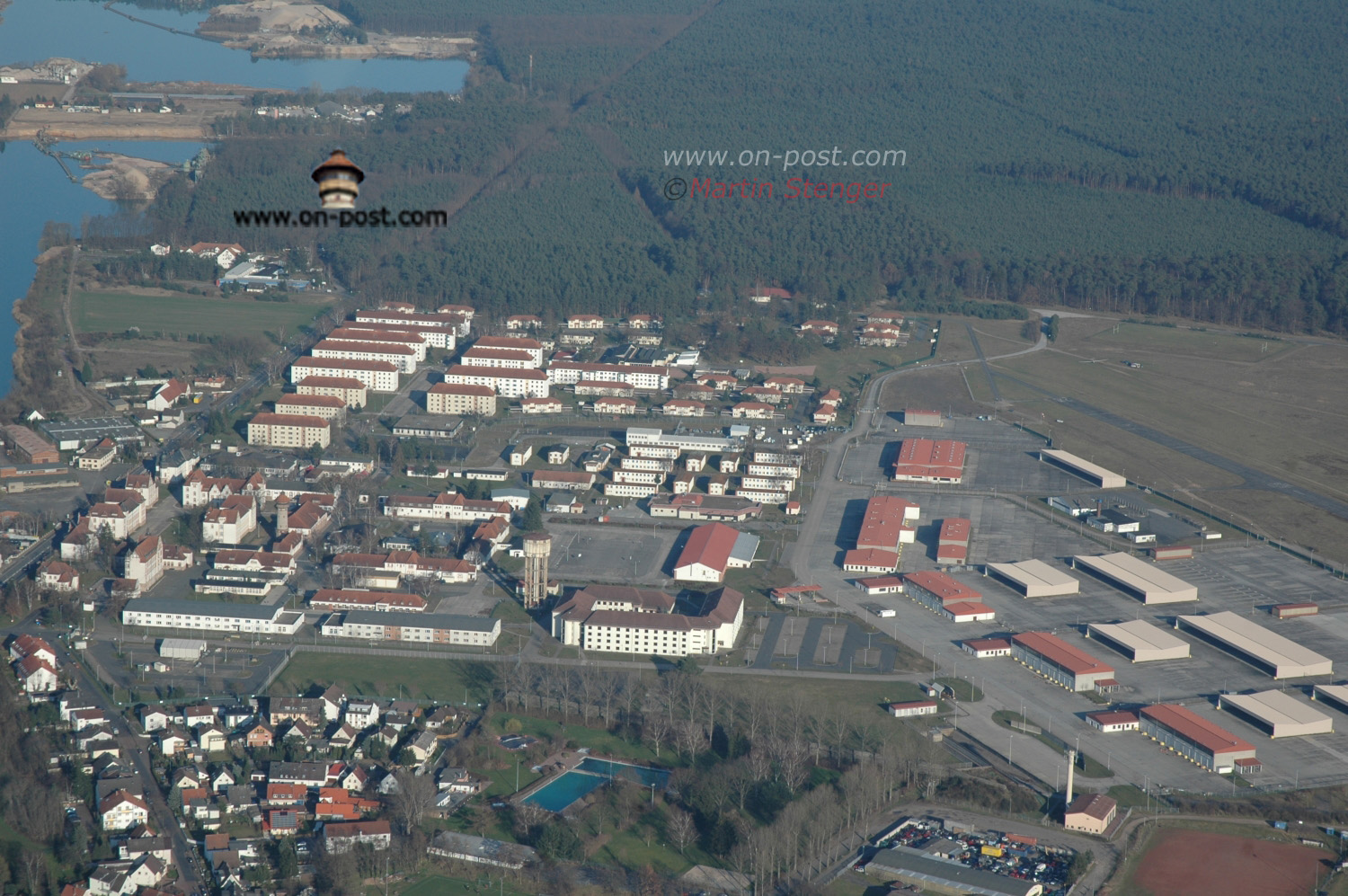
Babenhausen camp, orginally a military barracks  and later too, 
but a Displaced Persons camp after World War II

Martha and Stasys Meet

Martha and Stasys sailed to Australia from the German port of Bremerhaven on the American military transport ship General Stuart Heintzelman on 30 October 1947. If Stays thought that he had left his wife and children temporarily, he knew by 1947 that there was no going back, not perhaps for a lifetime. Similarly, Martha may have known that August Donald had been rounded up by the Communists but would not have known that he had died in prison on 15 August 1947, a relatively youthful 45 years old.

Stasys was 41 years old when he left Europe. Martha was 35. At some stage before embarkation or in the next two months, the two met. Ann thinks that Stasys might have made the first move on learning her name, which seemed so obviously Scottish. After all, Scotland was where he had lived for the first 14 years of his life.

They were married in the Bonegilla camp at the start of a new year in a new country, on 1 January 1948. Despite Stasys’ Roman Catholic upbringing, they were married by the local Lutheran pastor, Bruno Muetzelfeldt.

Early Years in Australia

One week after the Heintzelman passengers arrived at the Bonegilla, on 15 December, Stasys had joined the camp staff. His maturity at the age of 41, his former employment as a policeman and border guard and the fact that he had grown up speaking English (but probably Lithuanian in the home) would have made him quite an asset. Martha joined the staff on that date too. Again, at the age of 35, she was more mature than most of the women.

They stayed on the staff until 25 October 1948. On 1 November, they left for new employment at the Beechworth Mental Hospital, in Victoria but less than 50 Km southwest of the Bonegilla camp.

You may have wondered why we earlier made of point of Stasys’ admission Lithuanian Riflemen's Union in 1935. His interest in shooting as a sport became apparent after the move to Beechworth, when the local newspaper, the Ovens and Murray Advertiser, had 18 mentions of Vytautas participating in competitions between July and October 1949.

Undoubtedly, he and Martha were released from their contract obligation to work where sent by the Employment Service on 30 September 1949, along with nearly all the other First Transport arrivals. They are likely to have moved away from Beechworth then, but we will not know more until the National Archives of Australia releases their citizenship application files.

They Become Australian Citizens

Thinking of citizenship, Stasys was so keen to do something about his that he advertised his intention to apply for naturalization under the Nationality and Citizenship Act 1948 in the Ovens and Murray Advertiser as early as 4 June 1949. At that time, the Act required one year‘s residence immediately preceding the date of the application and another 4 years in the preceding 8 years, 5 years in all, although there were exceptions. Perhaps the Beechworth lawyers advising Stays, named in the advertisement, thought he might be eligible under one of the exceptions as someone who had spent his first 14 years in Scotland. They were wrong.

Stasys tried again together with Martha in February 1955, advertising together in the Melbourne Argus newspaper. On both occasions, the naturalization law required advertisements in 2 newspapers but the second advertisement has not been captured yet by the National Library’s Trove digitising service.

This time Stays was successful, along with Martha, when they took their oaths and received their citizenship certificates on 23 January 1958 (Martha) and 4 February 1958 (Stasys). Why there should have been 11 days between 2 separate ceremonies is an unknown. They then were living at 35 Cecil Street, Fitzroy, close to Melbourne’s central business district.

In those days, 35 Cecil Street might have been shared accommodation, like that in which Kostas Bušma lived. Due to the pause in home building during the Great Depression of the 1930s and World War II, this often was the only type of accommodation available to those who could not afford to buy land and build a house or buy an established house.

35 Cecil Street, Fitzroy, would have been designed and probably built in the 1880s,
and still has some of its original bluestone (basalt) paving in the street

Stasys took the English-language forename Stanley when he became a citizen.

In their first appearances on a digitised electoral roll, the 1958 and 1963 rolls for the State of Victoria, they were still at the Fitzroy address.

By the time the 1967 rolls were compiled, they were living in St Albans. This was a residential suburb only a few kilometres northeast of Melbourne’s centre. Martha was described as a machinist while Stasys was a guillotine operator, but we are not told the industries in which they were working.

Stasys Dies

On 14 September 1970, Stasys died of a heart attack while at work, at the age of 63. The Melbourne Lithuanian language newspaper, Tėviškės aidai, reported that he had married an Estonian and had been living without mixing with other Lithuanians. He was buried on 17 September in the Fawkner Cemetery from Melbourne’s Lithuanian (Roman Catholic) church.

A plaque for Stanislaus Blazaitis among others in a row of concrete suggests cremation;
Stasys has a 4th version of his name (Stanislovas, Stasys, Stanley and Stanislaus);  why Polish?

Martha stayed at the St Albans address, according to the electoral rolls, but by 1977 she had moved closer to central Melbourne, in her own flat in the suburb of North Melbourne. Downsizing, we probably would call it now.

Martha dies

She was still there when a 1980 roll for the electorate including North Melbourne was compiled but another 1980 New South Wales roll shows that she had moved to the Estonian retirement village on Estonian Road, Thirlmere. She was back among people who spoke her mother tongue, many of whom would have understood the twists and turns in her life.

Normally the Estonian newspaper in Australia, Meie Kodu, would have carried numerous advertisements from family and friends after a person’s death. For Martha there was one only, on 3 February 1999. It gave no details. In the Estonian language, it said, “Rest in peace” and recorded that it had been inserted by the Eesti Abistamise Komitee, the Estonian Relief Committee. This was the organisation which had founded the Estonian Village, Thirlmere, and was still running it in 1999.

From a photograph of a plaque for Martha in the Thirlmere Cemetery, we see that she died on 18 January 1999. She was 86 years old. An entry in the very reliable Website, Australian Cemetery Index, has her buried in Wollongong, but the Administrator of the site thinks that this may be instead where her body was cremated.

Martha Blazatitis' plaque in the Thirlmere Cemetery,
with her first name spelled as the Estonian Village administration thought it ought to be spelled;
the Estonian reads, "Born (née) Kivipuur, in Harku local government area, in Estonia,
Died in Picton:  Rest in Peace"

Although Martha was well enough to make a donation to the Australian Estonians’ Rahvuskapital fund in 1983, we hypothesise that her health deteriorated quickly after she moved to Thirlmere, so soon that she was unable to make and keep friends there. Like Stasys not mixing with other Lithuanians in Melbourne, she possibly did not spend time with other Estonians there either, making friendships which might have followed her to Thirlmere.

Given that Martha was 11 years older than the average age of all the Heintzelman passengers and Stasys was 17 years older, they possibly felt that they had little in common with these younger people. Estonians and Lithuanians of their own age in the Melbourne communities mostly would have arrived before World War II or have been born here, not having life experiences in common with those of Martha and Stasys.

A person in poor health in the Estonian Village would have been cared for well, but possibly would have had little social interaction with other residents. This may well have been a lonely end. However, Martha may have been too unwell to notice.  The very end appears to have come in a hospital in the town of Picton, near the Estonian Village, which would have had better resources to care for the dying.

SOURCES

‘AEF (American Expeditionary Force) DP Registration Record, Donald, Martha, Folder DP0843, names from DON, RACHELA to DONNER, Herbert (1), 3.1.1.1 Postwar Card File / Postwar Card File (A-Z) / Names in "phonetical" order from D /’ ITS/Arolsen Archives https://collections.arolsen-archives.org/en/document/66913948, accessed 11 May 2026.

Argus (1955) ‘Advertising’ Melbourne, Vic, 3 February, p 15 https://trove.nla.gov.au/newspaper/article/71631119, accessed 12 May 2026.

Australian Cemetery Index ‘Martha Blazaitis’ https://austcemindex.com/inscription?id=1157522, accessed 11 May 2026.

Commonwealth of Australia Gazette (1958) ‘Certificates of Registration as Australian Citizens’, Canberra, ACT, 2 October, p 3300 http://nla.gov.au/nla.news-article240882361, accessed 12 May 2026.

Bonegilla Migrant Experience, ‘Bonegilla Identity Card Lookup, Stasys Blazaitis’ https://idcards.bonegilla.org.au/record/203693078, accessed 11 May 2026.

Bonegilla Migrant Experience, ‘Bonegilla Identity Card Lookup, Martha Donald’ https://idcards.bonegilla.org.au/record/203693079, accessed 11 May 2026.

Find A Grave ‘Marta (sic) Blazaitis’ https://www.findagrave.com/memorial/search?fulltext=&firstname=marta&middlename=&lastname=blazaitis&birthyear=&birthyearfilter=&deathyear=&deathyearfilter=&location=&locationId=&bio=&linkedToName=&plot=&memorialid=&mcid=&datefilter=&orderby=r, accessed 15 May 2026.

Find A Grave ‘Stanislaus Blazaitis’ https://www.findagrave.com/memorial/212524938/stanislaus-blazaitis, accessed 12 May 2026.

Geni.com ‘August Voldemar Donald’ https://www.geni.com/people/August-Donald/6000000029438163871?through=6000000039104063771, accessed 12 May 2026.

Geni.com ‘Martha Lisette Blazaitis {Donald} (Kivipuur)’ https://www.geni.com/people/Martha-Lisette-Blazaitis-Donald/6000000039104063771, accessed 12 May 2026.

Kuchel, Rachel (2015) ‘A hearty welcome and new beginning’ Lutheran Church of Australia, 10 June https://www.lca.org.au/blog/2015/06/10/a-hearty-welcome-and-new-beginning/, accessed 10 May 2026.

Meie Kodu (Our Home) (1949) ‘Bonegillast, need, kes alustasid uut elu kahekesi’, (‘From Bonegilla, those who have started a new life as a couple’ in Estonian) Sydney, NSW, 30 September, p 4 http://nla.gov.au/nla.news-article85529251, accessed 11 May 2026.

Meie Kodu (Our Home) (1983) ‘Rahvuskapitali Tanu’ (‘National Fund Thanks’, in Estonian) Sydney, NSW, 31 August, p 6 https://dea.digar.ee/cgi-bin/dea?a=d&d=meiekodu19830831.1.6&e=-------et-25--1--txt-txIN%7ctxTI%7ctxAU%7ctxTA-------------, accessed 12 May 2026.

My Heritage ‘Morkuniene Family Tree, Blažaitytė (Morkūnienė), ‎‬Stanislovas (Stanley) Blažaitis’ https://www.myheritage.lt/family-trees/morkuniene/OYYV7JNVATLM736OPEKDPMDTD6DD4EY, accessed 11 May 2026.

National Archives of Australia: Department of Immigration, Central Office; A11772, Migrant Selection Documents for Displaced Persons who travelled to Australia per General Stuart Heintzelman departing Bremerhaven 30 October 1947, 1947-1947; 351, BLAZAITIS Stasys born 3 August 1908, 1947-1947 recordsearch.naa.gov.au/SearchNRetrieve/Interface/ViewImage.aspx?B=4695250, accessed 12 May 2026.

National Archives of Australia: Department of Immigration, Central Office; A11772, Migrant Selection Documents for Displaced Persons who travelled to Australia per General Stuart Heintzelman departing Bremerhaven 30 October 1947, 1947-1947; DONALD Martha DOB 9 April 1912, 1947-1947 recordsearch.naa.gov.au/SearchNRetrieve/Interface/ViewImage.aspx?B=5005894, accessed 12 May 2026.

National Archives of Australia: Migrant Reception and Training Centre, Bonegilla [Victoria]; A2571, Name Index Cards, Migrants Registration [Bonegilla], 1947-1956; BLAZAITIS NEE DONALD MARTHA, BLAZAITIS (NEE DONALD), Martha : Year of Birth - 1912 : Nationality - ESTONIAN : Travelled per - GEN. HEINTZELMAN : Number – 1101, 1947-1948 recordsearch.naa.gov.au/SearchNRetrieve/Interface/ViewImage.aspx?B=203693079, accessed 12 May 2026.

National Archives of Australia: Migrant Reception and Training Centre, Bonegilla [Victoria]; A2571, Name Index Cards, Migrants Registration [Bonegilla], 1947-1956; BLAZAITIS STASYS, BLAZAITIS, Stasys : Year of Birth - 1906 : Nationality - LITHUANIAN : Travelled per - GEN. HEINTZELMAN : Number – 745, 1947-1948 recordsearch.naa.gov.au/SearchNRetrieve/Interface/ViewImage.aspx?B=203693078, accessed 12 May 2026.

‘Original collection, DE ITS 2.1.1.1 HE 033 EST 2 ZM, 2.1.1.1 HE 033 EST Nationality/origin of person listed : Estonian / 2.1.1.1 HE 033 EST 2 Information on foreigners being locally registered (after the war) in the district Marburg/lahn (SK)’ ITS/Arolsen Archives https://collections.arolsen-archives.org/en/document/70452790, accessed 12 May 2026.

‘Original collection, DE ITS 2.1.1.1 HE 033 EST 2 ZM, 2.1.1.1 HE 033 EST 2 Information on foreigners being locally registered (after the war) in the district Marburg/lahn (SK)’ ITS/Arolsen Archives https://collections.arolsen-archives.org/en/document/70452784, accessed 12 May 2026.

‘Original collection, DE ITS 2.1.1.2 HE 033 9 EST ZM, 2.1.1.2 HE 033 9 EST Nationality/origin of person listed : Estonian’, ITS/Arolsen Archives https://collections.arolsen-archives.org/en/document/70539799, accessed 12 May 2026.

‘Original collection, DE ITS 2.1.1.2 HE 033 11 EST ZM, 2.1.1.2 HE 033 11 EST Nationality/origin of person listed : Estonian,’ ITS/Arolsen Archives https://collections.arolsen-archives.org/en/document/70539884, accessed 12 May 2026.

‘Original collection, DE ITS 2.1.1.1 HE 032 RUS 11 ZM, 2.1.1.1 HE 032 RUS 11 Information on foreigners extracted from files of social securities and employment agencies of the district Marburg/Lahn’ ITS/Arolsen Archives https://collections.arolsen-archives.org/en/document/70451687, accessed 12 May 2026.

Ovens and Murray Advertiser (1949) ‘Advertising’ Beechworth, Vic, 4 June, p 2, https://trove.nla.gov.au/newspaper/article/268200609, accessed 15 May 2026.

Ovens and Murray Advertiser (1949) ‘Sweepstake Shoot To-Day’ Beechworth, Vic, 9 July, p 6, https://trove.nla.gov.au/newspaper/article/268193869, accessed 15 May 2026.

Ovens and Murray Advertiser (1949) ‘Rifle Shooting, Beechworth Club, To-day’s Shoot’, Beechworth, Vic, 8 October, p 5 https://trove.nla.gov.au/newspaper/article/268197421, accessed 15 May 2026.

Tėviškės aidai (Echoes of the Homeland) (1970) ‘Mirė Stasys Blazaitis‘ (‘Death of Stasys Blazaitis’ in Lithuanian) Melbourne, Vic, 29 September, p 4 https://www.spauda2.org/teviskes_aidai/archive/1970/1970-nr37-TEVISKES-AIDAI.pdf accessed 12 May 2026.

Wikipedia ‘Harku Parish’ https://en.wikipedia.org/wiki/Harku_Parish, accessed 11 May 2026.

Wikipedia ‘Carfin’ https://en.wikipedia.org/wiki/Carfin, accessed 11 May 2026.