Showing posts with label Estonian Village Thirlmere. Show all posts

10 June 2026

Nikolai Müristaja (1912-1989): Watchmaker, Jeweller, Gardener, by Ann Tündern-Smith

Nikolai starts Australian life with a job in his speciality

By some fluke, Nikolai Müristaja, recruited as a Labourer to Australia from Estonia via Germany after WWII and travelling here on the General Stuart Heintzelman, was sent for his first job after arrival to employment which really suited him.

Might this have been because his first employer, recorded on his Bonegilla card as “Geo. W. Speirs of Griffiths” (sic) had thought to ask at Bonegilla if any of the new arrivals had trained as a jeweller or watchmaker?

The fluke would have been anyone know that Nikolai had this training, and advising Mr Speirs of it. (I am assuming that Nikolai's own English and knowledge of his industry in Australia was not yet up to the task of making his own enquiries.)

Nick Müristaja with friend, Griffith, NSW, 1948
Source:  Collection of Valeria Mets Blackburn

Watchmakers and Jewellers

The Estonian Pärnu Päevaleht newspaper reported, on 9 February 1935, that Nikolai Muristaja was about to receive a certificate commemorating his passing of examinations in the field of working on time-pieces.

The one known newspaper advertisement for the business opened by Nikolai in the northeast Estonian town of Kiviõli, as a watchmaker who also sold moderately priced crystal, gold and silver object, optical requirements, etc.
Source:  Rahvaleht, 30 May 1940, through DIGAR

George W Speirs, according to a notice about his will published in the Government Gazette of the State of New South Wales on 30 November 1962, was a Jeweller and Farmer in Griffith, New South Wales. Since Jewellers often are Watchmakers and repairers too, what a match with Nikolai!

In time (no, that pun was not intended), Nikolai opened up his own business as Nick Muristaja the Jeweller. This was not in competition with George's business, but because it was getting more work than he and Nick could handle in the one workshop.

Nick the Jeweller opens his second business, this time, in Griffith, NSW
Source:  Estonian Archives in Australia

The Estonian Archives in Australia, in its collection of papers relating the Nick and his wife, Nora, has an advertisement for Nick Muristaja, The Jeweller, clipped from an unknown Australian newspaper with no date. It also has a clipping from the Riverina Daily News, dated 21 October 1970 and titled, Griffith Jeweller Bows Out.

The latter reports that Nick worked for “this particular jeweller for about 15 years”, meaning that he would have started his own business in perhaps 1963. This was soon after George Speirs died, but a business in the family name still exists in Griffith. It is likely that Nick first helped the family and executors with the handover to its heir or heirs.

Selling his business in 1970 means that Nick ran it for only 7 years.

Nick the Jeweller bowing out from his Griffith shop
Source:  Daily News, Griffith, 21 October 1970 via
Estonian Archives in Australia

His plan was to retire to the coast. An  anonymous, undated summary of Nora’s life, including Nick, held by the Estonian Archives, places this on the NSW Central Coast.

Nick's Birth and Death

Having been born on 16 August 1912 (in Leisi, on Saaremaa Island) Nick was aged only 58 in October 1970 and 71 in July 1984. He died on 5 August 1989, just before his 77th birthday. Either he was temporarily unwell in 1970 but recovered in retirement, or he had made and invested enough money for his foreseeable needs and those of Nora.

In July 1984, Nick still had enough money saved to travel to North America for ESTO (the global Estonian cultural festival) held every four years, this time in Toronto, Canada. According to Vaba Eesti Sõna (Free Estonian Word), he also had stopovers in San Francisco, Los Angeles, Lakewood (New Jersey, where many Estonians lived) and Long Island, New York, and would move on to Europe.

Nick Marries

Nick and Nora had married on 8 December 1951, not in Griffith where Nick was living, but in another Riverina town, Leeton. It is about 45 kilometres away from Griffith as the local birds fly, more by the local indirect roads. Why Leeton was chosen we no longer know.

The Riverina Daily News journalist, Jim Mulcair, told his readers that the couple had first met in Germany and their marriage was followed by a one-day honeymoon in another local town, Narrandera. Nora then flew to Adelaide, where she was working as a nursing aide in the Northfield Mental Hospital.

Nikolai's early life and War

Jim Mulcair summarised Nick’s early life in Estonia as training in the village of Vändra, about 45 Km northeast of the city of Pärnu, and in the capital city, Tallinn. He than opened his own shop in the northeast town of Kiviõli. This is where he was located, close to Russia, when the Soviet Union first invaded in the summer of 1940.

He told Mulcair that, “I lived an adventurous life during the War, experiencing the good and the bad. I found myself at the front line, fighting the Nazis, who captured me 3 times. I escaped from their prison camps in Germany, Russia and Czechoslovakia, the last one of which was the worst camp I have seen.”

It is interesting that Nikolai focussed on fighting the Germans, yet finished the war in a Displaced Persons camp in Germany. I suspect that he told the Australian journalist what he wanted to hear, knowing that the Germans were Australia’s enemy during the War. For Estonians and other Baltic people, the Germans were unwanted invaders but the Soviet Union, based in Russia, was even worse.

The Australian selection team’s report on the intending immigrant has him working as a watchmaker for 5 years (from that 1935 certification), followed by 7 years as a labourer, including the last 5 months labouring for a farmer in Germany. It looks everyone was too busy to get watches and clocks repaired during the War.

The selection report leaves empty the places where the team might have recorded Nikolai's date of arrival in Germany and his reason for coming.

Mulcair’s report continued, “After the War, no-one seemed to know what Nick was so he was placed in a Displaced Persons camp.” An Arolsen Archives record card for a file destroyed in 1951 reports that Nick was in “DP Shop Oldenburg”, presumably the workplace associated with his camp. His medical examination for migration to Australia was carried out in Oldenburg, confirming the separate record of being in a DP camp there. Another sheet records his address as “Assembly Centre 224”, which a Web search confirms as likely to have been in the Oldenburg area, where there were camps for Baltic people and Poles.

Photo of Nikolai Müristaja from his 1947 selection papers

While Nick has only two records in the Arolsen Archives, his wife-to-be, Nora Lellep, has 6. She was in DP Camp 2515, and DP Camp Sandplatz, in Oldenburg, explaining how she and Nikolai may have met in Germany. She was classified then as a Nurse. (She had been the Head Housekeeper on a farm owned by the President of Estonia, Konstantin Päts, an association which would make her, even now, prima facie a political refugee.)

More on Nora

Soon after the marriage, Nora was touring northern Tasmania in February 1952 when she was involved in a fatal motor vehicle accident. The driver of a panel van which collided with the car in which she was travelling, with a driver and 4 others but not Nikolai, died before he could be moved to a larger hospital in Launceston. The accident was front page news in the North Eastern Advertiser based in Scottsdale.

The anonymous, undated, summary of Nora’s life says that she worked as a nurse in Tasmania but says nothing about the time. She also had nursed at a mental hospital near Newcastle, at the Concord Hospital in Sydney (which we have considered in some detail already) and in Melbourne. It does not mention Adelaide.

Nick and Nora Become Australians

Nick became a naturalised Australian on 20 November 1957. Nora was naturalised in the same ceremony, but for some reason known only to officialdom, this was confirmed in a Commonwealth Government Gazette 4 months after Nick’s naturalisation was announced.

Retirement and Gardening

According to the Archives’ summary, Nora and Nick had retired to the Central Coast before moving to the Estonian Retirement Village in Thirlmere, NSW. After Nick died, on 5 August 1989, days before his 77th birthday, Nora moved into the Retirement Village’s Hostel. That is where I met with her 20 years ago.

Nora Müristaja's own photograph of her late husband, Nikolai
Source:  Müristaja collection
scanned 7 August 2006

She was in her nineties then, and thought that the man in the large framed photograph might be her brother when it was her husband. She could still remember winning gardening competitions with the garden she and Nick developed in Griffith though. Jim Mulcair reported first prizes in Griffith, Riverina and Sydney garden competitions. Nora showed me the certificate for what might have been a Sydney Morning Herald competition, but it appears not to be in the Estonian Archives collection.

Ülle Slamer, who had worked with Nora when both of them had first arrived in Australia, celebrated Nora’s 100th birthday in late 2012 in Meie Kodu. She confirmed that the first prize was in a Sydney Morning Herald competition, in 1963. Retirement to the Central Coast was a home in Gosford, where they also won a first prize for gardens in small towns.

Nora accepts a sash for winning one of the garden competitions
Source:  Estonian Archives in Australia

They also created a new garden around their unit in the Thirlmere retirement village.  When Nora moved into the hostel, she started a rock garden there.

Jim Mulcair and Ülle Slammer both mentioned Nora’s bark paintings. They were popular with purchasers in Griffith and, later, in Newcastle (a major city north of Gosford).

In 1987, “O.P.” reviewing the art exhibition at the 13th Estonian Days gathering at the end of the previous year, included both Nikolai and Nora as less well known exhibitors. We could expect someone who made his living from jewellery as well as watch repairs to have something of an artistic bent.

Nora Müristaja on her 100th birthday

Nora lived to be 101 years old. Her ashes now lie next those of her husband of 38 years, in a repository in the Thirlmere Cemetery.

A plaque for Nigoolas Müristaja in the Thirlmere Cemetery
(The Estonian version of Nikolai usually is spelled 'Nigulas';
'Puhka rahus' means Rest in Peace)
Source:  Ken on Find A Grave

ACKNOWLEDGEMENT: I wish to thank Terry Kass, Archivist at the Estonian Archives in Australia, for copying that Archives' file on the Muristajas for this project.

FOOTNOTE:  Estonians think that the Müristaja name might have been handed to the family as a joke, given that Nikolai's meek appearance might have been inherited from his male forebears.  It means "Thunderer".

CITE THIS AS:  Tündern-Smith, Ann (2026) 'Nikolai Müristaja (1912-1989): Watchmaker, Jeweller, Gardener'

SOURCES

AEF DP Registration Record 'Muristaja, Nikolai' https://collections.arolsen-archives.org/en/search/person/68364350?s=muristaja&t=2740782&p=0, Reference Code 03010101 16 266, Folder DP2802, names from MURINAS to MURNIEKS, Modris (1), ITS/Arolsen Archives https://collections.arolsen-archives.org/en/search/person/68364350?s=muristaja&t=2740782&p=0, accessed 9 June 2026.

Commonwealth of Australia Gazette (1958) 'Certificates of Naturalization, Nikolai Muristaja’ Canberra, ACT, 8 May, p 1442, http://nla.gov.au/nla.news-article240891976accessed 3 June 2026.

Commonwealth of Australia Gazette (1958) 'Certificates of Naturalization, Nora Muristaja’ Canberra, ACT, 4 September, p. 2870, http://nla.gov.au/nla.news-article240881940accessed 3 June 2026.

Geni 'Nikolai Müristaja' https://www.geni.com/people/Nikolai-M%C3%BCristaja/6000000007645412229, accessed 9 June 2026.

Government Gazette of the State of New South Wales (1962) ‘RE will of GEORGE WILLIAM SPEIRS, late of Griffith' Sydney, NSW, 30 November, p 3619, http://nla.gov.au/nla.news-article220383899, accessed 17 March 2026.

Mulcair, Jim (1970) ‘Griffith Jeweller Bows Out’ Riverina Daily News, Griffith, NSW, 21 October, p 1.

National Archives of Australia: Department of Immigration, Central Office; A11772, Migrant Selection Documents for Displaced Persons who travelled to Australia per General Stuart Heintzelman departing Bremerhaven 30 October 1947, 1947-1947; 206, MURISTAJA Nikolai DOB 16 August 1912, 1947-1947 recordsearch.naa.gov.au/SearchNRetrieve/Interface/ViewImage.aspx?B=4105816, accessed 7 June 2026.

National Archives of Australia: Department of Immigration, South Australia Branch; D4881, Alien registration cards, alphabetical series, 1946-1976; LELLEP NORA, MURISTAJA Nora - Nationality: Estonian - Arrived Sydney per Svalbard 29 October 1948 Also known as NEE LELLEP recordsearch.naa.gov.au/SearchNRetrieve/Interface/ViewImage.aspx?B=9195434, accessed 7 June 2026.

National Archives of Australia: Migrant Reception and Training Centre, Bonegilla [Victoria]; A2571, Name Index Cards, Migrants Registration [Bonegilla], 1947-1956; MURISTAJA NIKOLAI, MURISTAJA, Nikolai : Year of Birth - 1912 : Nationality - ESTONIAN : Travelled per - GEN. HEINTZELMAN : Number – 602, 1947-1948 recordsearch.naa.gov.au/SearchNRetrieve/Interface/ViewImage.aspx?B=203729837, accessed 7 June 2026.

North-Eastern Advertiser (1952) 'Serious Accident Near Derby' Scottsdale, Tas, 26 February, p 1, http://nla.gov.au/nla.news-article149421507, accessed 17 March 2026.

“O.P” (1987) ‘XIII Eesti Päevade näitusel’ (‘At the 13th Estonian Days Exhibition’, in Estonian) Meie Kodu, Sydney, 29 April, p 4, https://dea.digar.ee/page/meiekodu/1987/04/29/4, accessed 4 June 2026.

Pärnu Päevaleht (Pärnu Daily Paper) (1935) ‘Uusi ostustöölist’ (‘New Craftspeople’, in Estonian) Parnu, Estonia, 9 February, p 3 https://dea.digar.ee/page/parnupaevaleht/1935/02/09/3, accessed 3 June 2026.

Rahvaleht (National Paper) (1940) [Advertising] Tallinn, Estonia, 30 May, p 8 https://dea.digar.ee/page/rahvalehtvabamaa/1940/05/30/8, accessed 4 June 2026.

‘Refugee/Displaced Person Statistical Card (Lellep, Nora)’ Reference Code 03010101 14 150, Folder DP2339, names from LEKES, Vavrinec to LELIONKA, Vincas (2), 3.1.1.1 Postwar Card File / Postwar Card File (A-Z) / Names in "phonetical" order from L, ITS/Arolsen Archives https://collections.arolsen-archives.org/en/document/68011981, accessed 7 June 2026.

‘Resettled file, Muristaja, Estonian’ Reference Code 03010101 16 266, Folder DP2802, names from MURINAS to MURNIEKS, Modris (1), 3.1.1.1 Postwar Card File / Postwar Card File (A-Z) / Names in "phonetical" order from MI, ITS/Arolsen Archives https://collections.arolsen-archives.org/en/document/68364349, accessed 4 June 2026.

Slamer, Ülle (2013) ‘Nora Müristaja pühitses 15. detsembril 2012 oma 100 aastast sünnipäeva’ (‘Nora Müristaja celebrated her 100th birthday on 15 December 2012’, in Estonian) Meie Kodu, Sydney, NSW, 30 January, p 8 https://dea.digar.ee/article/meiekodu/2013/01/30/25.1, accessed 4 June 2026.

Vaba Eesti Sõna (Free Estonian Word) (1984) ‘Reporteri Märkmikust’ (‘From a Reporter’s Notebook’, in Estonian) New York, NY, 5 July, p 8 https://dea.digar.ee/page/vabaeestisona/1984/07/05/8, accessed 7 June 2026.

16 May 2026

Martha (nee Kivipuur) Donald Blažaitis (1912-1999) and Stanislovas (Stasys) Blažaitis (1906-1970): the Scottish connection, Estonian marries Lithuanian by Rasa Ščevinskienė and Ann Tündern-Smith

Updated 4 June 2026.

Scots?

Martha Donald came to Australia with a Scottish name despite possibly never having been outside the Baltic States or Germany before. She had married and divorced another Estonian with this most non-Estonian surname, Donald. His forenames were very Estonian though: August Voldemar. His father and grandfather before him were born in Estonia: any Scottish connection might have started with the great grandfather or earlier.

Martha Donald's colourised photo from her selection for Australia papers

Stanislovas Blažaitis, on the other hand, had been born in Scotland on 3 August 1906 (although one record says 1908), despite the very Lithuanian name.

Stays Blažaitis, colourised photo from his Bonegilla card

The Blažaitis family

Economic migration from Lithuania after the famine of 1867-88 and into early 20th century took many people as far away as the United States, Canada, South Africa, and even Australia, but others only got as far as Scotland or England. It looks like Stanislovas‘ parents or maybe even his grandparents were part of this movement.

Stanislovas‘ father was also Stanislovas, born in 1884. His mother was Katrina Lapinckute, born in 1878. Both lived in the village of Carfin in North Lanarkshire in the central lowlands of Scotland. Stanislovas senior lived on Bell Row while Katarina lived on Back Brick Row. Neither street still exists in Carfin according to Google Maps. Indeed, if anything, the whole village looks from the air as if it has been rebuilt since World War II.

Regardless, the two parents, Stanislovas, then aged 19 and working as a miner in the Carfin coal mines, and Katrina, aged 25, were married in Carfin’s Roman Catholic Church on 26 September 1903. They were to have 7 children altogether, but 2 of them died very young.

The Blažaitis family returned to now independent Lithuania on 15 May 1921, when Stanislovas junior was 14 years old. Unverified data shows that he initially lived in Kaunas. Stanislovas Blažaitis (in some documents simply Stasys) graduated from high school there. In 1928-30 he served in the Lithuanian army attaining the rank of non-commissioned officer.

Stasys in Lithuania and Germany

According to data from the first census of Lithuanian police officers in 1932, he was working as an ordinary guard with the border police of Pagulianka village, Ukmergė county.

He met his future wife, Konstancija Janonytė-Pociūnaitė, in Kernavė, Širvintos district. There he rented a room from his future wife's parents and worked as a policeman in the border service in the village of Gurakolnė. They married on 11 February 1934, when Stasys was aged 28, and continued to live in Kernavė.

On 27 September 1935, he was admitted to the Lithuanian Riflemen's Union.

According to data from the Lithuanian census of 27 May 1942, he and his family now were living in the town of Karmėlava near Kaunas. He is known to have worked as a police officer in the Kaunas County until 4 February 1943.

When Lithuania was occupied by the Soviets from August 1944, Stanislovas left for Germany. His wife and 5 children (4 sons and a daughter) stayed in Lithuania.

The Arolsen Archives have only one record for him, from an index compiled in the early 1980s from small sets of cards. Unfortunately, the handwriting in this record is such that neither the eye nor Google Translate’s phone app can decipher where he was or what work he was doing although, and it is a big although, one entry dated 17 May 1945 seems to read Wehrmacht, German for the Nazi Armed Forces.

This being the case, it is probably that he did not desert his wife and family, but was forcibly taken from them due to his position in the Lithuanian forces then fighting with the Germans against the Soviet Union.

The record of his interview with the Australian selection panel confirms this idea, as it says, ‘Forcibly brought by the Germans’. It also records that, at the time of his application for Australia, he was living in Camp Riga in coastal Lübeck, a camp which must have been set up to house Latvians. Among the languages he knew, English was second only to Lithuanian and ahead of Russian and Polish. His English language skills were described as “very fair” – probably as positive a description as anyone was going to get from this panel. Strangely, German was not mentioned.

Martha in Germany

The Arolsen Archives have been able to digitise 11 records for Martha Donald, all with the same birthdate of 9 April 1912 or, in one case, her maiden name of Kivipuur. They tell us that she was born in Harku vald, a local government area close to the western side of Estonia’s capital city, Tallinn.

Her parents were Johannes Kivipuur and Leena, formerly Tramm. The two languages she knew already when being registered as a Displaced Person were Estonian and German. Her previous place of residence was in Tallinn. Her place of residence in Germany was Marburg-Lahn, where she worked in local the Universität Ohrenklinik or University Ear Clinic.

We don’t know what kind of work she was doing there. Indeed, her previous occupation is not recorded either on the AEF DP Registration Record or the Australian selection panel’s interview record. There it was noted that she had 6 years of primary education and was suitable for work as a domestic. This was the occupation to which all the women were assigned unless they could type, had previous nursing experience or were young and presentable enough to work as waitresses in Government hostels in Canberra instead.

A fifth category for the chosen women was housemaid, but the difference between this and domestic is difficult to discern today, when probably there are no women admitting to either occupation.

One Arolsen Archives list indicates that, on 13 June 1947, Martha had left Marburg-Lahn for an UNRRA camp in Hanau, over 100 Km to the southeast and still around two hours travel away. There was a major DP camp near Hanau, at Babenhausen, handed over to UNRRA by the US Army in May 1947, which was listed as Martha’s last address in her papers for migration to Australia.

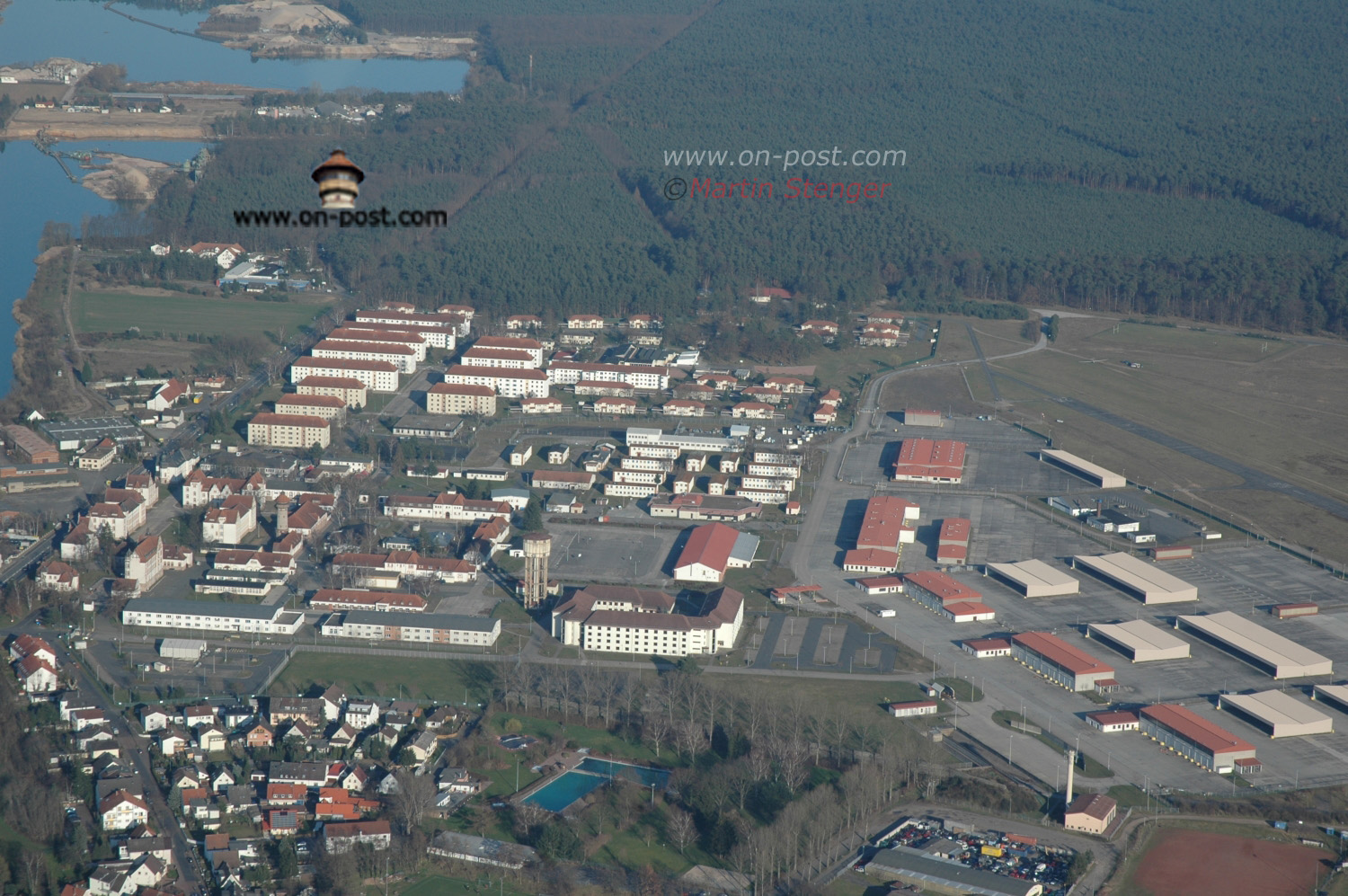
Babenhausen camp, orginally a military barracks  and later too, 
but a Displaced Persons camp after World War II

Martha and Stasys Meet

Martha and Stasys sailed to Australia from the German port of Bremerhaven on the American military transport ship General Stuart Heintzelman on 30 October 1947. If Stays thought that he had left his wife and children temporarily, he knew by 1947 that there was no going back, not perhaps for a lifetime. Similarly, Martha may have known that August Donald had been rounded up by the Communists but would not have known that he had died in prison on 15 August 1947, a relatively youthful 45 years old.

Stasys was 41 years old when he left Europe. Martha was 35. At some stage before embarkation or in the next two months, the two met. Ann thinks that Stasys might have made the first move on learning her name, which seemed so obviously Scottish. After all, Scotland was where he had lived for the first 14 years of his life.

They were married in the Bonegilla camp at the start of a new year in a new country, on 1 January 1948. Despite Stasys’ Roman Catholic upbringing, they were married by the local Lutheran pastor, Bruno Muetzelfeldt.

Early Years in Australia

One week after the Heintzelman passengers arrived at the Bonegilla, on 15 December, Stasys had joined the camp staff. His maturity at the age of 41, his former employment as a policeman and border guard and the fact that he had grown up speaking English (but probably Lithuanian in the home) would have made him quite an asset. Martha joined the staff on that date too. Again, at the age of 35, she was more mature than most of the women.

They stayed on the staff until 25 October 1948. On 1 November, they left for new employment at the Beechworth Mental Hospital, in Victoria but less than 50 Km southwest of the Bonegilla camp.

You may have wondered why we earlier made of point of Stasys’ admission Lithuanian Riflemen's Union in 1935. His interest in shooting as a sport became apparent after the move to Beechworth, when the local newspaper, the Ovens and Murray Advertiser, had 18 mentions of Vytautas participating in competitions between July and October 1949.

Undoubtedly, he and Martha were released from their contract obligation to work where sent by the Employment Service on 30 September 1949, along with nearly all the other First Transport arrivals. They are likely to have moved away from Beechworth then, but we will not know more until the National Archives of Australia releases their citizenship application files.

They Become Australian Citizens

Thinking of citizenship, Stasys was so keen to do something about his that he advertised his intention to apply for naturalization under the Nationality and Citizenship Act 1948 in the Ovens and Murray Advertiser as early as 4 June 1949. At that time, the Act required one year‘s residence immediately preceding the date of the application and another 4 years in the preceding 8 years, 5 years in all, although there were exceptions. Perhaps the Beechworth lawyers advising Stays, named in the advertisement, thought he might be eligible under one of the exceptions as someone who had spent his first 14 years in Scotland. They were wrong.

Stasys tried again together with Martha in February 1955, advertising together in the Melbourne Argus newspaper. On both occasions, the naturalization law required advertisements in 2 newspapers but the second advertisement has not been captured yet by the National Library’s Trove digitising service.

This time Stays was successful, along with Martha, when they took their oaths and received their citizenship certificates on 23 January 1958 (Martha) and 4 February 1958 (Stasys). Why there should have been 11 days between 2 separate ceremonies is an unknown. They then were living at 35 Cecil Street, Fitzroy, close to Melbourne’s central business district.

In those days, 35 Cecil Street might have been shared accommodation, like that in which Kostas Bušma lived. Due to the pause in home building during the Great Depression of the 1930s and World War II, this often was the only type of accommodation available to those who could not afford to buy land and build a house or buy an established house.

35 Cecil Street, Fitzroy, would have been designed and probably built in the 1880s,
and still has some of its original bluestone (basalt) paving in the street

Stasys took the English-language forename Stanley when he became a citizen.

In their first appearances on a digitised electoral roll, the 1958 and 1963 rolls for the State of Victoria, they were still at the Fitzroy address.

By the time the 1967 rolls were compiled, they were living in St Albans. This was a residential suburb only a few kilometres northeast of Melbourne’s centre. Martha was described as a machinist while Stasys was a guillotine operator, but we are not told the industries in which they were working.

Stasys Dies

On 14 September 1970, Stasys died of a heart attack while at work, at the age of 63. The Melbourne Lithuanian language newspaper, Tėviškės aidai, reported that he had married an Estonian and had been living without mixing with other Lithuanians. He was buried on 17 September in the Fawkner Cemetery from Melbourne’s Lithuanian (Roman Catholic) church.

A plaque for Stanislaus Blazaitis among others in a row of concrete suggests cremation;
Stasys has a 4th version of his name (Stanislovas, Stasys, Stanley and Stanislaus);  why Polish?

Martha stayed at the St Albans address, according to the electoral rolls, but by 1977 she had moved closer to central Melbourne, in her own flat in the suburb of North Melbourne. Downsizing, we probably would call it now.

Martha dies

She was still there when a 1980 roll for the electorate including North Melbourne was compiled but another 1980 New South Wales roll shows that she had moved to the Estonian retirement village on Estonian Road, Thirlmere. She was back among people who spoke her mother tongue, many of whom would have understood the twists and turns in her life.

Normally the Estonian newspaper in Australia, Meie Kodu, would have carried numerous advertisements from family and friends after a person’s death. For Martha there was one only, on 3 February 1999. It gave no details. In the Estonian language, it said, “Rest in peace” and recorded that it had been inserted by the Eesti Abistamise Komitee, the Estonian Relief Committee. This was the organisation which had founded the Estonian Village, Thirlmere, and was still running it in 1999.

From a photograph of a plaque for Martha in the Thirlmere Cemetery, we see that she died on 18 January 1999. She was 86 years old. An entry in the very reliable Website, Australian Cemetery Index, has her buried in Wollongong, but the Administrator of the site thinks that this may be instead where her body was cremated.

Martha Blazatitis' plaque in the Thirlmere Cemetery,
with her first name spelled as the Estonian Village administration thought it ought to be spelled;
the Estonian reads, "Born (née) Kivipuur, in Harku local government area, in Estonia,
Died in Picton:  Rest in Peace"

Martha was well enough to make a donation to the Australian Estonians’ Rahvuskapital fund in 1983, and to join in the annual mass season's greetings advertisement the Meie Kodu newspaper in December 1990.  We hypothesise, however, that her health deteriorated quickly after she moved to Thirlmere, so soon that she was unable to make and keep friends there. Like Stasys not mixing with other Lithuanians in Melbourne, she possibly did not spend time with other Estonians there either, making friendships which might have followed her to Thirlmere.

Given that Martha was 11 years older than the average age of all the Heintzelman passengers and Stasys was 17 years older, they possibly felt that they had little in common with these younger people. Estonians and Lithuanians of their own age in the Melbourne communities mostly would have arrived before World War II or have been born here, not having life experiences in common with those of Martha and Stasys.

A person in poor health in the Estonian Village would have been cared for well, but possibly would have had little social interaction with other residents. This may well have been a lonely end. However, Martha may have been too unwell to notice.  The very end appears to have come in a hospital in the town of Picton, near the Estonian Village, which would have had better resources to care for the dying.

SOURCES

‘AEF (American Expeditionary Force) DP Registration Record, Donald, Martha, Folder DP0843, names from DON, RACHELA to DONNER, Herbert (1), 3.1.1.1 Postwar Card File / Postwar Card File (A-Z) / Names in "phonetical" order from D /’ ITS/Arolsen Archives https://collections.arolsen-archives.org/en/document/66913948, accessed 11 May 2026.

Argus (1955) ‘Advertising’ Melbourne, Vic, 3 February, p 15 https://trove.nla.gov.au/newspaper/article/71631119, accessed 12 May 2026.

Australian Cemetery Index ‘Martha Blazaitis’ https://austcemindex.com/inscription?id=1157522, accessed 11 May 2026.

Commonwealth of Australia Gazette (1958) ‘Certificates of Registration as Australian Citizens’, Canberra, ACT, 2 October, p 3300 http://nla.gov.au/nla.news-article240882361, accessed 12 May 2026.

Bonegilla Migrant Experience, ‘Bonegilla Identity Card Lookup, Stasys Blazaitis’ https://idcards.bonegilla.org.au/record/203693078, accessed 11 May 2026.

Bonegilla Migrant Experience, ‘Bonegilla Identity Card Lookup, Martha Donald’ https://idcards.bonegilla.org.au/record/203693079, accessed 11 May 2026.

Find A Grave ‘Marta (sic) Blazaitis’ https://www.findagrave.com/memorial/search?fulltext=&firstname=marta&middlename=&lastname=blazaitis&birthyear=&birthyearfilter=&deathyear=&deathyearfilter=&location=&locationId=&bio=&linkedToName=&plot=&memorialid=&mcid=&datefilter=&orderby=r, accessed 15 May 2026.

Find A Grave ‘Stanislaus Blazaitis’ https://www.findagrave.com/memorial/212524938/stanislaus-blazaitis, accessed 12 May 2026.

Geni.com ‘August Voldemar Donald’ https://www.geni.com/people/August-Donald/6000000029438163871?through=6000000039104063771, accessed 12 May 2026.

Geni.com ‘Martha Lisette Blazaitis {Donald} (Kivipuur)’ https://www.geni.com/people/Martha-Lisette-Blazaitis-Donald/6000000039104063771, accessed 12 May 2026.

Kuchel, Rachel (2015) ‘A hearty welcome and new beginning’ Lutheran Church of Australia, 10 June https://www.lca.org.au/blog/2015/06/10/a-hearty-welcome-and-new-beginning/, accessed 10 May 2026.

Meie Kodu (Our Home) (1949) ‘Bonegillast, need, kes alustasid uut elu kahekesi’, (‘From Bonegilla, those who have started a new life as a couple’ in Estonian) Sydney, NSW, 30 September, p 4 http://nla.gov.au/nla.news-article85529251, accessed 11 May 2026.

Meie Kodu (Our Home) (1983) ‘Rahvuskapitali Tanu’ (‘National Fund Thanks’, in Estonian) Sydney, NSW, 31 August, p 6 https://dea.digar.ee/cgi-bin/dea?a=d&d=meiekodu19830831.1.6&e=-------et-25--1--txt-txIN%7ctxTI%7ctxAU%7ctxTA-------------, accessed 12 May 2026.

Meie Kodu (Our Home) (1990) 'Jõulutervitus' ('Christmas Greetings' in Estonian) Sydney, NSW, 12 December, p 12 https://dea.digar.ee/?a=d&d=meiekodu19901212.1.12&srpos=7&e=-------et-25--1--txt-txIN%7ctxTI%7ctxAU%7ctxTA-blazaitis+%252Dilse------------, accessed 4 June 2026.

Meie Kodu (Our Home) (1999) [Advertisements] Sydney, NSW, 3 February, p 7 https://dea.digar.ee/?a=d&d=meiekodu19990203.1.7&e=-------et-25--1--txt-txIN%7ctxTI%7ctxAU%7ctxTA-------------accessed 4 June 2026.

My Heritage ‘Morkuniene Family Tree, Blažaitytė (Morkūnienė), ‎‬Stanislovas (Stanley) Blažaitis’ https://www.myheritage.lt/family-trees/morkuniene/OYYV7JNVATLM736OPEKDPMDTD6DD4EY, accessed 11 May 2026.

National Archives of Australia: Department of Immigration, Central Office; A11772, Migrant Selection Documents for Displaced Persons who travelled to Australia per General Stuart Heintzelman departing Bremerhaven 30 October 1947, 1947-1947; 351, BLAZAITIS Stasys born 3 August 1908, 1947-1947 recordsearch.naa.gov.au/SearchNRetrieve/Interface/ViewImage.aspx?B=4695250, accessed 12 May 2026.

National Archives of Australia: Department of Immigration, Central Office; A11772, Migrant Selection Documents for Displaced Persons who travelled to Australia per General Stuart Heintzelman departing Bremerhaven 30 October 1947, 1947-1947; DONALD Martha DOB 9 April 1912, 1947-1947 recordsearch.naa.gov.au/SearchNRetrieve/Interface/ViewImage.aspx?B=5005894, accessed 12 May 2026.

National Archives of Australia: Migrant Reception and Training Centre, Bonegilla [Victoria]; A2571, Name Index Cards, Migrants Registration [Bonegilla], 1947-1956; BLAZAITIS NEE DONALD MARTHA, BLAZAITIS (NEE DONALD), Martha : Year of Birth - 1912 : Nationality - ESTONIAN : Travelled per - GEN. HEINTZELMAN : Number – 1101, 1947-1948 recordsearch.naa.gov.au/SearchNRetrieve/Interface/ViewImage.aspx?B=203693079, accessed 12 May 2026.

National Archives of Australia: Migrant Reception and Training Centre, Bonegilla [Victoria]; A2571, Name Index Cards, Migrants Registration [Bonegilla], 1947-1956; BLAZAITIS STASYS, BLAZAITIS, Stasys : Year of Birth - 1906 : Nationality - LITHUANIAN : Travelled per - GEN. HEINTZELMAN : Number – 745, 1947-1948 recordsearch.naa.gov.au/SearchNRetrieve/Interface/ViewImage.aspx?B=203693078, accessed 12 May 2026.

‘Original collection, DE ITS 2.1.1.1 HE 033 EST 2 ZM, 2.1.1.1 HE 033 EST Nationality/origin of person listed : Estonian / 2.1.1.1 HE 033 EST 2 Information on foreigners being locally registered (after the war) in the district Marburg/lahn (SK)’ ITS/Arolsen Archives https://collections.arolsen-archives.org/en/document/70452790, accessed 12 May 2026.

‘Original collection, DE ITS 2.1.1.1 HE 033 EST 2 ZM, 2.1.1.1 HE 033 EST 2 Information on foreigners being locally registered (after the war) in the district Marburg/lahn (SK)’ ITS/Arolsen Archives https://collections.arolsen-archives.org/en/document/70452784, accessed 12 May 2026.

‘Original collection, DE ITS 2.1.1.2 HE 033 9 EST ZM, 2.1.1.2 HE 033 9 EST Nationality/origin of person listed : Estonian’, ITS/Arolsen Archives https://collections.arolsen-archives.org/en/document/70539799, accessed 12 May 2026.

‘Original collection, DE ITS 2.1.1.2 HE 033 11 EST ZM, 2.1.1.2 HE 033 11 EST Nationality/origin of person listed : Estonian,’ ITS/Arolsen Archives https://collections.arolsen-archives.org/en/document/70539884, accessed 12 May 2026.

‘Original collection, DE ITS 2.1.1.1 HE 032 RUS 11 ZM, 2.1.1.1 HE 032 RUS 11 Information on foreigners extracted from files of social securities and employment agencies of the district Marburg/Lahn’ ITS/Arolsen Archives https://collections.arolsen-archives.org/en/document/70451687, accessed 12 May 2026.

Ovens and Murray Advertiser (1949) ‘Advertising’ Beechworth, Vic, 4 June, p 2, https://trove.nla.gov.au/newspaper/article/268200609, accessed 15 May 2026.

Ovens and Murray Advertiser (1949) ‘Sweepstake Shoot To-Day’ Beechworth, Vic, 9 July, p 6, https://trove.nla.gov.au/newspaper/article/268193869, accessed 15 May 2026.

Ovens and Murray Advertiser (1949) ‘Rifle Shooting, Beechworth Club, To-day’s Shoot’, Beechworth, Vic, 8 October, p 5 https://trove.nla.gov.au/newspaper/article/268197421, accessed 15 May 2026.

Tėviškės aidai (Echoes of the Homeland) (1970) ‘Mirė Stasys Blazaitis‘ (‘Death of Stasys Blazaitis’, in Lithuanian) Melbourne, Vic, 29 September, p 4 https://www.spauda2.org/teviskes_aidai/archive/1970/1970-nr37-TEVISKES-AIDAI.pdf accessed 12 May 2026.

Wikipedia ‘Harku Parish’ https://en.wikipedia.org/wiki/Harku_Parish, accessed 11 May 2026.

Wikipedia ‘Carfin’ https://en.wikipedia.org/wiki/Carfin, accessed 11 May 2026.